8 min.
Loyalty programs: How to choose the best martech platform?
1L’art de la gestion de projet2Un projet à succès commence par une bonne gouvernance3Cascade, agilité, demandes de changement?

Loyalty programs: How to choose the best martech platform?

  • TECHNICAL LEVEL
Tech Loyalty MarTech

Martech for loyalty programs is like an invisible spinal column. It's impossible to operationalize a high-performance loyalty program without a technological ecosystem that is strong, well-integrated, flexible and, above all, centred on data and customer experience (CX).

While CRM and e-commerce technologies are mature and well demarcated—we are all familiar with the leading tools, their strengths and their limitations—the loyalty field is a whole other universe... a chaotic one. In this article, I'll give you a behind-the-scenes look at what I've observed in the Canadian and wider North American marketplace.

To help you make the right choices for your loyalty program, I've assembled the questions I'm most often asked on the subject.

  1. Do I really need a loyalty platform?
  2. All-in-one or custom solution?
  3. What are the main loyalty technologies?
  4. What do I need to know before buying martech?

1. Do I really need a loyalty platform?

This is a completely legitimate question to ask before you start your search. Implementing a new piece of technology is a major expense—financial, operational, and organizational. Your choices will directly influence the overall ROI of your loyalty program.

When you can forgo a technological platform

Sometimes the tools you already have in place are sufficient to generate real value if they are exploited intelligently.

If your goal is to create a program without points (called a relationship program), you likely don't really need to add a dedicated technology as long as:

  • you already have a solid CRM with well-structured data and the ability to segment, automate, and personalize;
  • your main objective is to strengthen the customer relationship—appreciate, recognize, inform—without managing points, tiers, or point accumulation; and
  • your team is already in control of coordinating communications and activating the right channels.

In this context, a loyalty platform might be an unnecessary tool. Instead, invest in your relationship strategy, content, governance, and activation abilities.

When you probably need one

In other situations, a specialized platform becomes essential for ensuring the fluid, reliable, and evolving operation of your loyalty program. The goal here isn't to add a new tool, but to guarantee that your program can evolve without operational overload or a patchwork of technologies.

Your current tools (CRM, e-commerce, POS) have their limitations, and trying to overextend them beyond their intended use brings real risk. Complex rules, points calculations, or frameworks for tiers within these systems can:

  • slow down their performance;
  • create dependencies that are hard to maintain;
  • complicate updates; and
  • increase the likelihood of errors that directly affect customer experience.

Even if you've chosen the best CRM for your needs, it won't be able to manage the next challenge in gamification or your program's three different reward levels.

A dedicated loyalty platform becomes indispensable if you are planning to:

  • Award points (whether customers are winning them, earning them, or redeeming them) based on purchases and/or activities and behaviours related to engagement
  • Introduce tiers with evolving rules (ex., Gold level after X number of purchases)
  • Manage a multi-channel journey where enrollment, point accumulation, and redemption must be consistent across the web, in-store, in the mobile application, at POS, etc.

If this is your situation, then a specialized technology is probably necessary. It will allow you to effectively manage the back end (rules, points, tiers), connect your different systems, and ensure a uniform experience across all points of contact.

This is the point at which things get complicated: transaction volume, data synchronization, channel diversity, evolving business rules... All of these elements necessitate the right martech that can support your present goals and future growth.

recompense-programme-fidelite
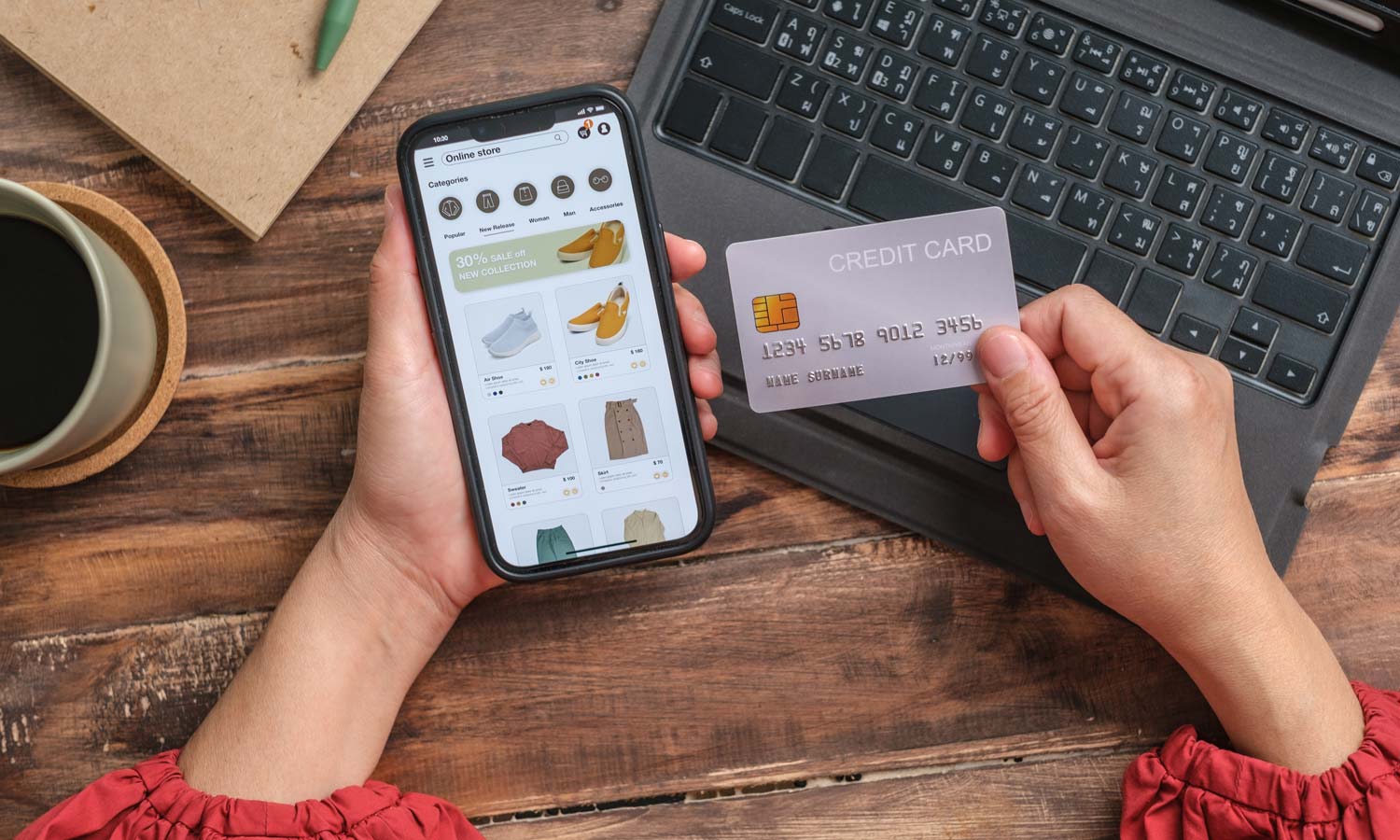
A user gets a reward via the mobile application for a loyalty program

2. All-in-one or custom: How to choose a loyalty platform

Choosing between an existing loyalty solution available in the marketplace or a customized approach is a key decision. Understanding the strengths and limitations of each option lets you avoid costly regrets.

Existing platform

In most cases, existing solutions for managing loyalty represent a solid option with clear advantages.

  • Ready-to-implement features: rules for points, tiers, analytics, digital cards
  • Faster time-to-market
  • Increasing capacity for artificial intelligence: optimization, recommendations, reporting

Despite their all-in-one assertion, commercial solutions have their limitations. Since these are back-end tools that plug into your existing ecosystem, they are directly dependent on the quality of your technological foundations. If your customer data are poorly structured, no platform will be able to process them—there is still no magic button to solve that issue. In that case, you would need to review your data strategy and clarify it.

In certain very specific cases, commercial platforms can lack flexibility. This is why it is so important to fully define your strategy and needs before choosing martech.

Customized solutions

A customized loyalty solution will particularly suit highly unique, complex business models (hybrid models, complex B2B, community usage). It’s also a relevant option for IT ecosystems that are not just mature, but also robust, with the right internal resources to help with configuration and management.

This type of project involves rigorous planning in order to anticipate the costs related to maintenance, evolution, compatibility, and patching.

3. What are the main loyalty technologies?

A tumultuous marketplace that’s still in its early stages

While CRM (HubSpot, Salesforce, MS Dynamics) and e-commerce (Shopify, Magneto, BigCommerce) technologies have achieved some maturity—with well-established leaders, well-known integrators, and standardized best practices—the loyalty ecosystem, for its part, is still fragmented.

It’s a market in full swing, where players are multiplying, innovating, and jockeying for position. More than a hundred platforms exist in the marketplace, yet Gartner only lists around twenty or so, often with little history or limited contexts for installation. In Canada, no organic leader has yet emerged and specialized integrators are rare.

Traversing such a landscape becomes challenging, even chaotic. How can you sort through, evaluate, and make a selection when product offerings are evolving so quickly?

A continuing wave of innovation

Data from the LoyalT 20251 study show that the adoption of loyalty programs is continually increasing. Today, Canadians use 41% of the programs they are enrolled in, which is nine programs on average. In 2017, they only used six.

loyalt-study-2025-loyalty-programs-usage

Loyalty numbers are increasing. So are expectations: personalization, speed, gamification, a faultless mobile experience. The technology is keeping pace with these high expectations, pushing providers to quickly evolve.

  • Personalization modules in real time
  • Evolved gamification engines
  • Integrated digital wallets
  • Flexible earn/burn rules (product, category, behaviour, frequency)
  • AI to optimize promotions, detect churn, or recommend actions
  • Native connectors to major CRM/e-commerce/POS systems
  • Non-monetary rewards (community, engagement, UGC, challenges, events)

This race to innovate is what is sustaining market fragmentation as technology providers attempt to cover every need.

The four major martech categories

Every company and every loyalty program has its peculiarities. To efficiently compare your options, here is a simple, practical categorization that I regularly employ.

Category

Typical use

Who should prioritize this category

Full specialized suite in loyalty

Platforms natively designed for loyalty, with rules for points, tier levels, gamification, partners

Medium and large businesses, multi-channel, mature program

Shopify-native solution (or “pure” e-commerce)

Plug-in module or extension for e-commerce, often very simple, rapid deployment

Companies and programs with a strong digital strategy, pure e-commerce, limited budget

POS-centric

Software connected to cash register systems, adapted to physical stores, restaurants, franchise

Multi-store retail, restaurants, physical stores

All-in-one CRM/loyalty solution

CRM/marketing automation platform that includes a loyalty component

Companies looking to unify CRM with loyalty, less specialization in loyalty


A few providers you should know

There is no definitive list of “best loyalty platforms.” That said, here are 10 platforms I’ve come across in my projects or analyses.

  1. LoyaltyLion: a Shopify-native platform designed for e-commerce brands that want a fast, simple, and effective program
  2. Smile.io: an ultra-accessible, popular solution for small and medium-sized Shopify or e-commerce stores
  3. Yotpo: a loyalty component integrated into a complete e-commerce ecosystem (loyalty, opinions, SMS), ideal for digital brands
  4. Antavo: a full specialized suite for loyalty, adapted to multi-country, multi-brand, or very advanced programs
  5. Talon.One: ultra-flexible rule engine to manage promotions, coupons, incentives, and complex loyalty programs
  6. Annex Cloud: a solution focused on loyalty and community engagement, often chosen by big brands
  7. Open Loyalty: a headless/API-first platform for building a customized program or to integrate loyalty into an advanced technology architecture
  8. Salesforce Loyalty Management: loyalty component integrated into the Salesforce ecosystem, ideal for centralizing CRM + marketing + loyalty
  9. Comarch Loyalty: a robust solution for large companies with international or highly complex programs
  10. Data Candy: a POS-centric platform frequently used in retail and the restaurant business, perfect for local chains and in-store environments

Obviously, this is not an exhaustive list. There are many other martech solutions that are worth further exploration.

The agnostic approach

When it comes time to evaluate different loyalty platforms, you should adopt a truly agnostic approach. This is what we do at adviso.

All too often, companies rely solely on partners, resellers, or integrators who recommend “their” solution not because it is the best for your organization, but because they have received a certification, are official partners, or are paid by commission.

This introduces a significant selection bias. When a partner represents only one single technology or a limited number of solutions, they are rarely encouraged to fully explore all the options available, even if some of those are better adapted to your needs, your maturity level, or your budget.

To make an informed decision, ensure that you:

  • compare several solutions from different categories;
  • validate the advantages and limitations with independent sources;
  • question the nature of partnerships, certifications, or commissions; and
  • give preference to objective evaluations based on your requirements, not on an offer from a provider.

application-mobile-magasinage
A consumer gets help from a loyalty program while choosing products in-store

4. What do I need to know before buying martech?

Plan your budget correctly

One of the most common pitfalls is underestimating the total cost of the loyalty platform. The cost of licensing and initial configuration is only the tip of the iceberg. In fact, it’s often integration into the existing ecosystem—CRM, POS, e-commerce, data warehouse, ERP—that consumes the largest portion of the budget.

Keep the following in mind:

  • Licences vary hugely. Depending on the provider, they could be dependent on the number of active members, transaction volume, number of stores/channels, or even the level of engagement.
  • Add-on components are common. Digital wallet, mobile application, gamification, advanced connectors, reporting tools... each component can add unexpected costs.
  • Integrations are major work. Even with out-of-the-box connectors, rigorously evaluate the true quality of integrations with your key systems. Otherwise you will need to plan for development of specific components.
  • Integration Platform as a Service (iPaaS). Pay attention to costs per API call. Many integration platforms invoice by use. A loyalty program can generate thousands of calls per day. Anticipate the financial impact that will have.

Before you compare platforms, analyze the full ecosystem, not just the initial cost of entry. A loyalty program is a lot more than just points and rewards.

The three types of costs to consider

In loyalty, as in marketing in general, compare apples with apples. And above all, consider all the costs, both visible and invisible.

1. Licences

The cost of the loyalty platform itself is determined by:

  • the number of users;
  • the volume of members or transactions;
  • the level of service;
  • the active components.

2. Set-up and integration

This is often where the surprises come in.

  • Platform configuration
  • Definition of business rules
  • Integration of CRM/POS/e-commerce/mobile app
  • UX adaptation
  • QA and testing

In Quebec, this challenge is amplified by the low number of specialized integrators available in loyalty.

3. Post-launch operational costs

A loyalty program isn’t a marketing campaign. It’s a long-term business strategy. A loyalty platform is therefore never a “set it and forget it” solution. Plan for the following:

  • training for your team
  • continual maintenance and updates
  • optimization of rules and campaigns
  • new features

Integrations: The most underestimated challenge

In my projects at adviso, I always notice the same thing: A loyalty platform only has value if it is perfectly integrated into your ecosystem. Martech won’t work in a silo.

Your loyalty program needs to communicate seamlessly with:

  • your customer data (CRM, data warehouse), to get a unified view of the customer, feed segmentation, and trigger the right communications;
  • your customer interfaces (e-commerce site, customer account, mobile app, in-store POS), so that the customer can view their points, enroll, and redeem points in real time wherever they are;
  • your ERP and accounting systems, because program points have a monetary value or must be accounted for as a liability.

loyalty-program-martech

Strategy comes before technology

Too often I see companies choosing their technology before they have even defined the parameters of their loyalty program. The result? A pointlessly costly program or one that is incapable of supporting the features and business rules that are essential to the program’s success. You would never construct a building without a plan.

Begin with a loyalty strategy:

  • your business model and objectives
  • your clientele and their behaviours
  • your scenarios for use
  • your rules for earning and redeeming points
  • your channels

The interaction channel is also a determining factor in your choice of technology. Before evaluating platforms, clearly define where and how your members will experience the program.

  • Sign-up: website, mobile application, in-store checkout
  • Point accumulation: purchases online, in-store, on the app, by payment card, by QR code
  • Redemption: online, at POS, in the app, via external partners

A loyalty program that is 100% e-commerce doesn't require the same architecture as one for an omnichannel program (stores, mobile application, website). Their constraints vary: synchronization frequency, ability to operate in real time, UX quality, earn/burn ratio, technical infrastructure.

Your strategy and the customer journey must dictate the technology, not the reverse. Don’t try to fit a square peg in a round hole by adapting your program to the limitations of a tool.

There’s no loyalty without martech

A loyalty program is a lucrative strategy for customer retention... so long as the golden rules are respected: Customer experience must be friction-free, engaging, and based on well-structured data.

Choosing the right technology contributes to success, but that’s not the only ingredient... FIRST you need to align your needs, your strategy, your channels, your rules, and your data. That's where loyalty martech makes all the difference.

At adviso, we support you through every stage of loyalty program development while being entirely agnostic, including strategy definition, program optimization and modelling, evaluation of your current ecosystem, and platform selection. Let's take a look at which technology best fulfills your needs.

In collaboration with Hans Laroche

REFERENCES

1The LoyalT 2025 Study by adviso: Data collection via web panel conducted by Ad Hoc Research from May 12 to June 7, 2025, amongst 15,000 Canadians aged 18 and over who were members of at least one loyalty program.

The article Loyalty programs: How to choose the best martech platform? first appeared on adviso.ca.