


It's impossible to ignore the dazzling growth of digital channels that has caused an explosion in the quantity of data available. As stated in The Economist, data might be the new oil1 (or then again, maybe not2). The challenge no longer lies in creating data. It's in capturing it and, above all, making it useful.
This is where a customer data platform (or CDP) starts making a lot of sense. A CDP transforms your raw data into a lever for performance and omnichannel experiences, all while respecting your customers' privacy.
Stay with me and I'll explain everything you need to know and, especially, whether you actually need one.
- What is a customer data platform (CDP)?
- Why is it important?
- What are the advantages?
- What is the difference between a CDP, CRM, and a DMP?
- Do you have to get a CDP?
- Conclusion
What is a customer data platform (CDP)?
Like oil, data assumes its full value once it's been refined. This refinement relies on three stages: capture, standardization, and activation.
Properly managing your data opens the door to a more personalized, coherent, and relevant relationship with your consumers. This is likely a tune you're already very familiar with. The term generally used for this is “omnichannel.”
A key technology for delivering an omnichannel experience is the customer data platform (CDP), also known as customer data infrastructure (CDI). In simple terms, a CDP is a technology placed at the centre of your marketing tools where it plays the role of an orchestra conductor.
Its three functions are therefore to:
- capture data, irrespective of where they reside (website, CRM, mobile application, email, in-store kiosk, etc.);
- standardize these data; and
- activate them in marketing channels (website, mobile, advertising, email, etc.).
Why is a customer data platform important?
CDPs are becoming increasingly important because they respond to a number of challenges related to managing customer data. Four reasons explain their rise: They enable improved enrichment of data, make data more accessible, and let you activate them in real time and manage them responsibly.
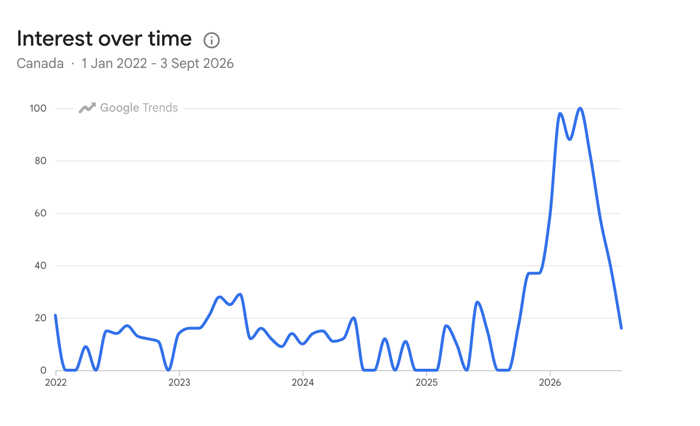
Trend line for the expression “customer data platform” in Google Trends
1. Data as a company asset
With the progressive erosion of the quality of traditional digital identifiers, organizations need to entirely rethink their data strategy. They're realizing that data are a strategic asset and that their security is simply non-negotiable. Orgs must therefore give preference to the collection of first-party and zero-party data (instead of third party), which is exactly what a CDP excels at.
Enthusiasm for data isn't recent, but its role is becoming essential. The increasing power of the chief data officer (or CDO) within organizations is a good example of this,³ as is the Kantar ranking of the most valuable brands.4
The companies in the latter all have one point in common: Data occupy a central place in their business models. They generate, control, or benefit from activities related to good data management. This is a far cry from the business models of 20 years ago!
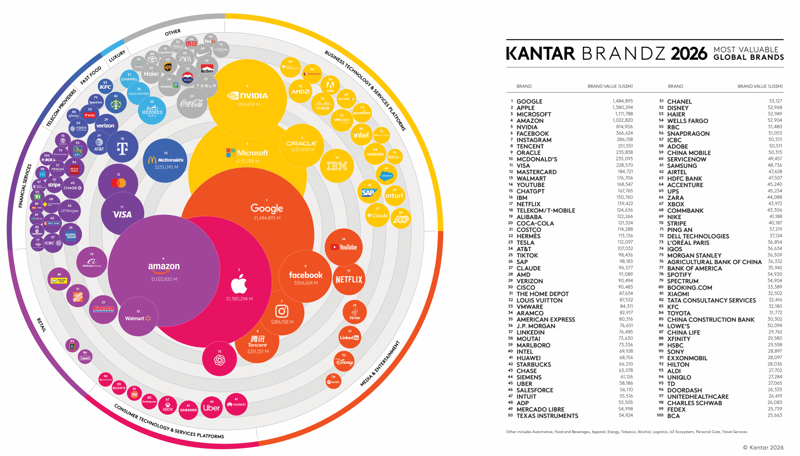 Global ranking of the top 100 most valuable brands in 2026 by Kantar
2. Liberating data
The CEO of Informatica, a leader in cloud data management, has emphasized that “the most value comes from being able to collect and correlate information from different kinds of systems.”5
The challenge lies in extracting the content from where it is being stored. In other words, avoiding making your data a prisoner of its platform.
To get around this, organizations must therefore collect data and not simply produce it. The data found in Google Analytics doesn't have the same value if it only resides on the platform as opposed to being extracted, standardized, and deployed for an audience, for example. This is where a CDP is a game changer.
By extracting the data, your company is opened up to a whole new world of possibility and strategic insight. This is even more the case with the arrival of Google Analytics 4 (GA4) in 2023 and its improved capacities for exporting to BigQuery.
3. Real-time marketing and personalization
Real-time marketing, identified as a transformative trend by Gartner,6 is no longer a hard-to-achieve ambition; it has now become possible with the help of a CDP.
This real-time capacity gets improved even further with the integration of AI and machine learning into certain modern CDPs, which particularly enables:
- automated segmentation;
- real-time decisioning;
- customer behaviour prediction; and
- customer experience (CX) personalization in real time on a wide scale.
According to a study by Salesforce,7 83% of marketing experts assert that customers now expect bidirectional communications, which means being able to respond to a marketing message and obtain a genuine response back. However, 69% of marketing experts struggle to respond quickly because they don't have access to the context they need.
As a result of ever-higher customer expectations, the capacity to offer relevant, contextualized interactions with a CDP is becoming a true competitive advantage.
4. Respect for privacy
“With great power comes great responsibility.” Despite all of the possibilities offered by good data management, everything starts with one simple principle: Put the user at the heart of the strategy.
This is accomplished notably through rigorous management of security and privacy. This is probably not surprising in itself, but the technical challenges remain considerable.
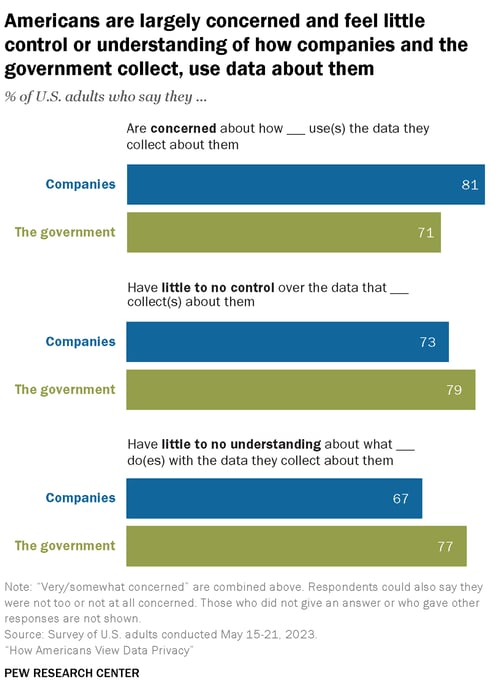
Americans are largely concerned about and have little control over or understanding of how companies and the government collect and use their data8
Let's look at a simple example to better understand the challenges related to user data management. As of today, it is still hard to simply delete a user from all of an organization's marketing systems without a laborious manual process. And yet Law 25 and the GPDR require that this deletion be performed within strict timelines. And this task becomes even more complex based on the number of components added to the marketing stack. A customer data platform helps you simplify this management by centralizing customer data.
In addition to responding to issues around data integrity, a CDP can also manage all personal data fields, allocating different levels of security and thereby ensuring the responsible management of customer data.
What are the benefits of a CDP?
In simple terms, a customer data platform (CDP) provides the technological basis needed to keep the omnichannel promise (of coherency and personalization in real time) while ensuring solid, responsible data governance.
Below I offer a list of the six advantages generally offered by a CDP. Many other advantages exist, depending on your business model and marketing activities.
What is the difference between a CDP, CRM, and a DMP?
A CDP doesn't compete with the tools you have already in place. Instead, the CDP plays the role of an orchestra conductor by positioning your current tools as:
- data sources (data capture);
- destinations (data activation); or
- both at the same time.
Since each originating system generates data in a different way, the CDP also standardizes the various formats in order to enable activation in your various interaction channels: email, advertising, personalization, etc.
So how should you compare a customer data platform (CDP), customer relationship management (CRM), and a data management platform (DMP)? The best way to distinguish between them is to start by looking at the types of data managed by these technologies.
Data management
A CDP and CRM both offer management of first-party data as their main ability. Conversely, a DMP focuses mainly on third-party data and its main use case is advertising (even though many DMPs offer other additional capacities).
Since third-party cookies haven't been reliable for several years, many traditional DMPs have evolved into hybrid models (enabling the ingestion of personally identifiable information (PII), which formerly wasn't the case) or were abandonned in favour of a CDP.
Marty Kihn, SVP of Market Strategy for Salesforce Marketing Cloud, emphasizes that CDPs could be seen as evolved CRMs9. I'm sympathetic to this view, especially regarding their activation channels and the way they capture data.
Data integrity is an especially major challenge in the case of the CRM, because the data are often entered by humans. In a CDP, the data are instead collected automatically, directly from the source. This automation facilitates their activation in real time and, when AI is integrated, wide-scale personalization.
The comparison that counts: What is the difference between a CDP and CRM?
Do you have to get a CDP?
Maybe, or maybe not.
Before investing, ask yourself this question: Is your data strategy ready for a CDP? If you don't have a data strategy yet, this is an ideal opportunity to create one. Don't get ahead of yourself, instead adapt the project to your organization's digital maturity.
You should also consider:
- Modern alternatives: Certain organizations opt for composable CDP architectures using their existing data warehouse (Snowflake, BigQuery) with reverse ETL tools, which might be more flexible and economical
- Necessary resources: A CDP requires technical expertise (data engineers, analysts) and continual investment, not just one technology purchase
- Realistic timeline: Expect 12 to 24 months for a complete implementation and realization of its full value
- Quick wins: Identify use cases that quickly bring value (90 days) to demonstrate ROI before full deployment
Before committing to the technology, design a business case to evaluate the potential impact on your organization in the years ahead. If you're already convinced of the benefits a CDP can bring, but are hesitating between a few providers, a proof of concept will let you compare the promises to the reality and better decide between options.
Let a CDP orchestrate your data
A customer data platform is the centrepiece uniting your data, channels, and marketing tools to turn them into a true lever for business.
By orchestrating customer data capture, standardization, and activation, a CDP transforms raw data into coherent information to provide you with clear insights and an omnichannel viewpoint. The result: Marketing that is more coherent, intelligent, and respectful of privacy.
Adviso is here to support you, from the diagnostic through to implementation and activation. From a totally agnostic perspective, we ensure that your CDP isn't just another piece of tech, but a true accelerator for your growth. Discover our approach.
REFERENCES
¹ The Economist, “The World’s Most Valuable Resource Is No Longer Oil, but Data,”The Economist, 6 May 2017.
² Antonio García Martínez, “No, Data Is Not the New Oil,” WIRED, 26 February 2019.
³ Christy Pettey, “Treating Information as an Asset,” Smarter with Gartner, 30 November 2017.
⁴ Kantar, "Most Valuable Global Brands 2026", 2026.
⁵ Roger Roberts, “Managing Data as an Asset: An Interview with the CEO of Informatica,” McKinsey & Company, 1 May 2019.
⁶ Gartner, “Gartner Identifies Four Emerging Trends That Will Transform How Marketers Run Their Technology Ecosystems,” Gartner, 29 August 2019.
⁷ Salesforce, “75% of Marketers Have Adopted AI, Yet Still Use It to Send Generic Campaigns,” Salesforce, 19 February 2026.
⁸ Colleen McClain, Michelle Faverio, Monica Anderson and Eugenie Park, “How Americans View Data Privacy,” Pew Research Center, 18 October 2023.
⁹ Allison Schiff, “Salesforce Says It Will Launch a CDP (Yep, You Heard That Right),” AdExchanger, 25 March 2019.
The article Everything You Need to Know about Customer Data Platforms (CDPs) first appeared on adviso.ca. It was originally published in December 2021 and was updated in September 2026. Our content is always designed and validated by our experts, who use AI to optimize it.



Email marketing, the essential part of marketing mix
Is email dead?

What is the ideal width for an email?
When you design a newsletter, one question quickly arises: What dimensions should an email have?

How to make a marketing plan: goals, strategies, tactics, and KPIs
Before launching marketing campaigns, implementing artificial intelligence (AI), or beginning any pr …