

Attribution is defined by the action of giving credit to the various touchpoints in the user journey. It is used, among other things, to effectively coordinate the budgets of marketing campaigns, the amounts invested between content, SEO or any other optimization activity of your company. In summary, attribution analysis tries to answer the magic question: which of your initiatives contribute the most to achieving your business objectives?
Jean-François Renaud talked about it in his article with the shoe store . Personally, I prefer the analogy of the hockey team. Who should be given the most credit for winning the match? To the striker who scored? To the defender who stole the puck from opposing players? To the goalie who stopped the pucks?
To be fair, you don't just want to reward the scorer, you also want to reward the other players without whom the scorer couldn't have "finished the job". Thus, there is not just one, but many attribution models, each with a bias.
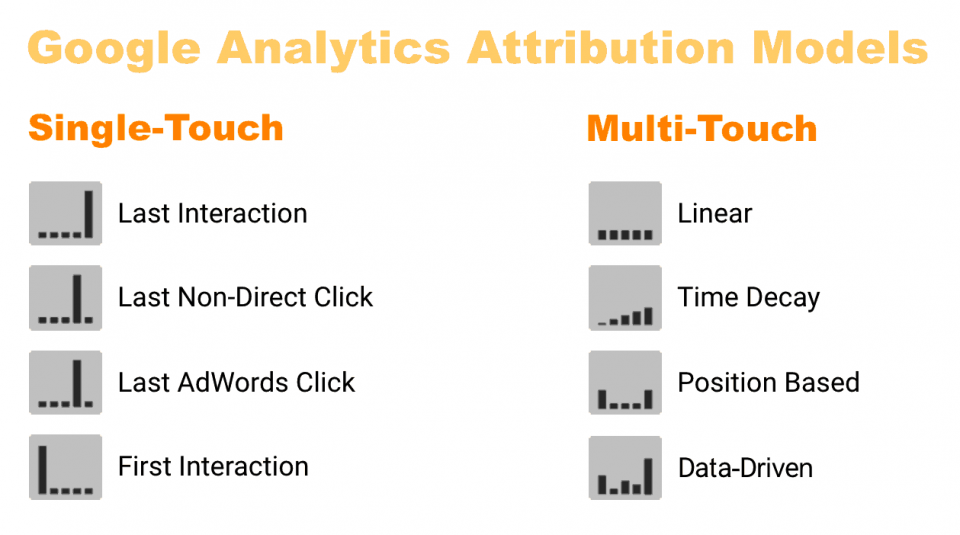
A long-standing feature of onsite measurement solutions , attribution models in Adobe Analytics were previously limited to first touch and last touch . By default set to 30 days, it could be complex to analyze the user journey according to the type of source in their customer journey, because we only had the first and last touchpoints available, but not what went between the two.
-png-1.png)
To have this in-between, it was necessary to perform complex and sometimes costly tasks, either in the platform or via external tools. Finally, another weakness of the majority of tools on the market is that they offer transaction-based attribution only. Adobe has been able to differentiate itself and better meet user needs by developing the Attribution IQ tool deployed in summer 2018.
“Adobe hits very hard with this tool because on the one hand, the attribution can be done on any metric, so we can now analyze transactions but also any other metric measured by an event, and this , with no time range limit. On the other hand, the integration of the solution with Workspace makes it possible to analyze the attribution results on the spot with all the variables available in your analytics solution.”
CONCRETELY, WHAT IS ATTRIBUTION IQ?
This is a new feature available through the Workspace data analysis tool that allows comparing the attribution of a conversion based on a chosen model . It can be used via two methods, in a table visualization, via a freeform table (on the left), or via the IQ attribution panel (on the right).
-png-1.png)
The main difference between the two is that the panel builds widgets by default, while the freeform, which allows more customization, is to be configured manually.
WITH THE FREEFORM TABLE:
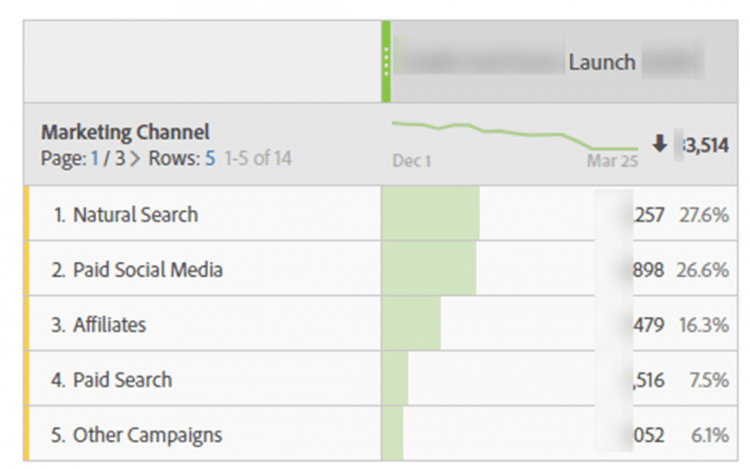
One way to use the tool is to make a table using your marketing channels as a dimension and your success event as a metric. Note that the sources here are credited with your default attribution model, the last touch defined by your marketing channels .
You will then have to click on the cogwheel of your metric, and check the non-default attribution model box.
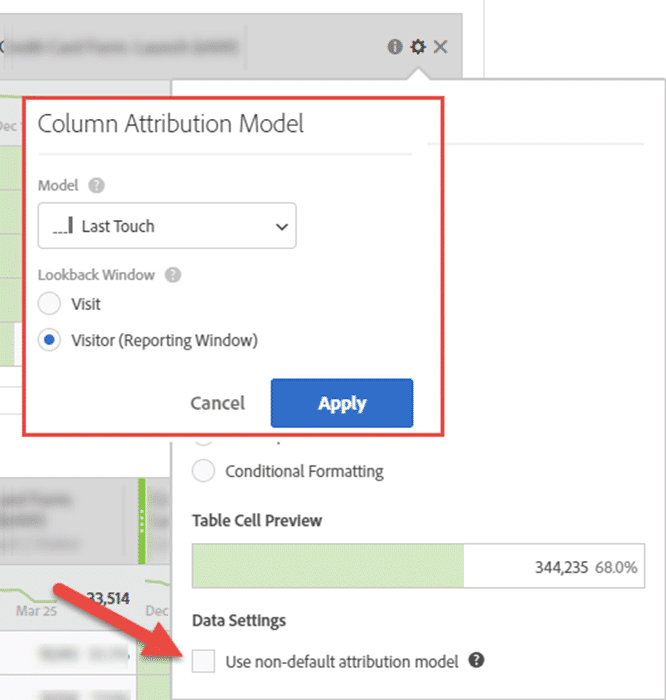
This is where the attribution model is chosen, as well as the lookback window , to the visit or to the user.
Ten models are currently available, including one custom.
Once these steps are done, the column presents the data with the chosen attribution model. One of the possibilities is to compare them with each other.
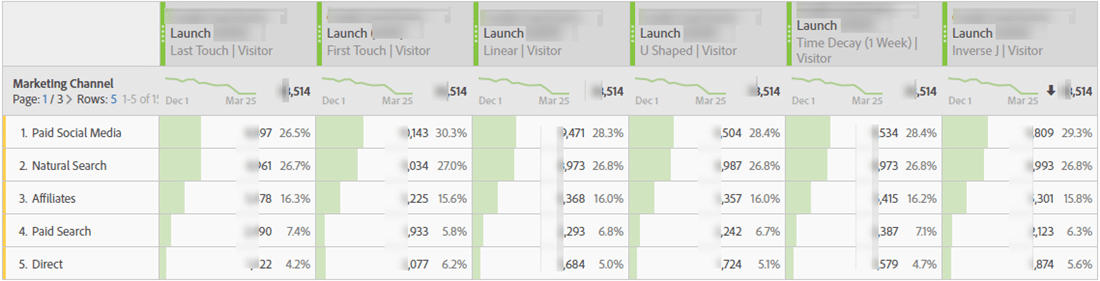
With the dedicated panel, simply let yourself be guided by Workspace, then select, as in the freeform, the scope (visit or user) and select the relevant attribution models.
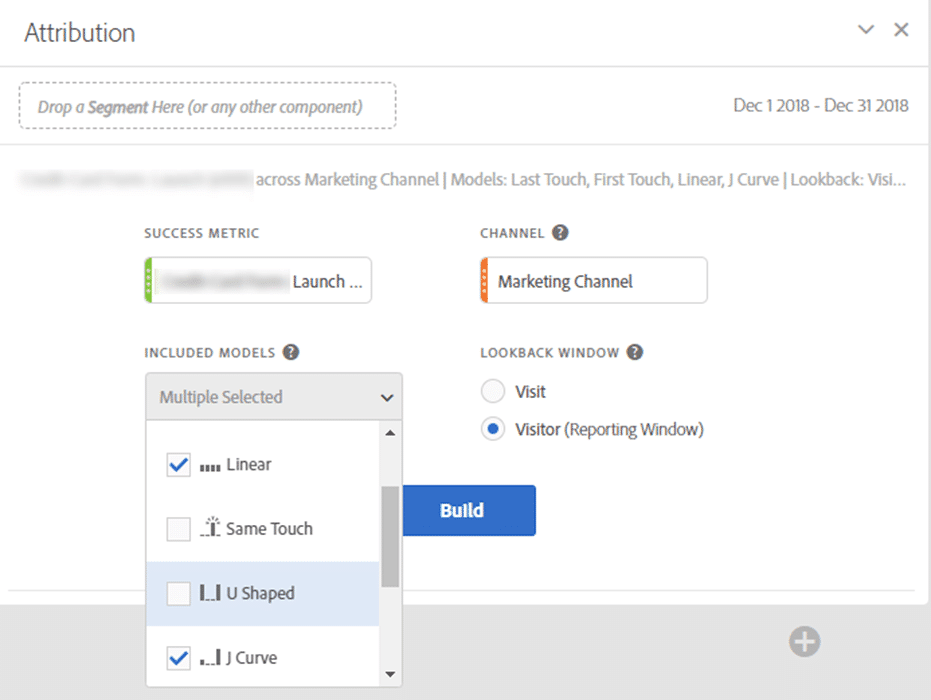
These steps create a set of widgets in your workspace:
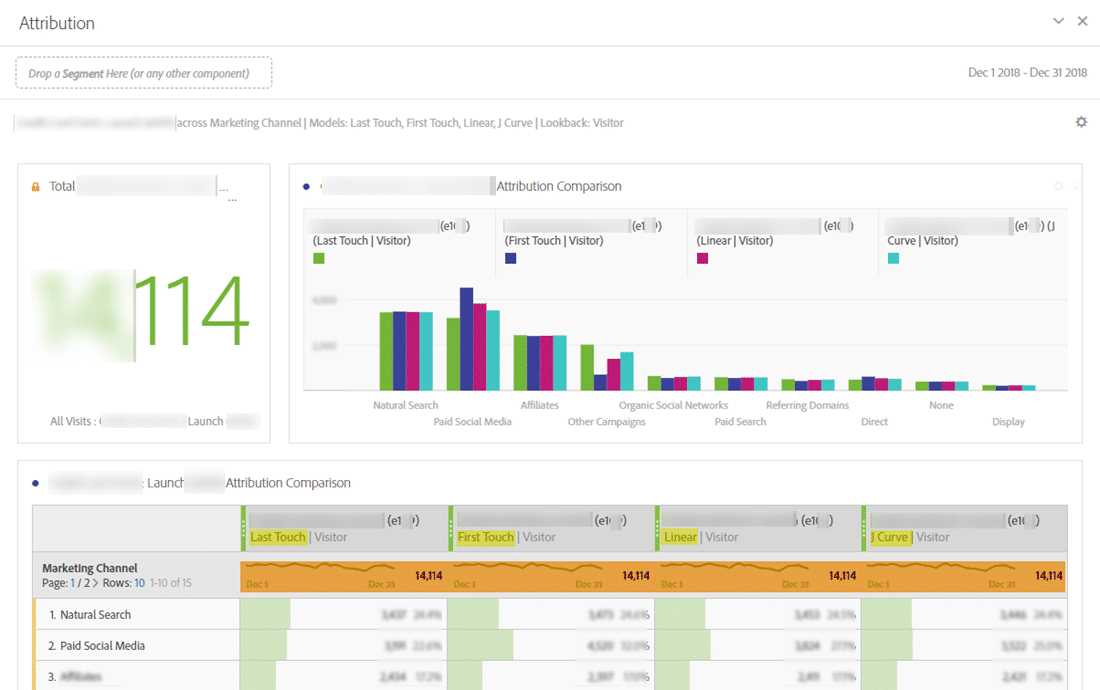
HOW TO INTERPRET THESE RESULTS?
The line highlighted in orange in the image above displays all conversions. The lines below show the credit given to each of the traffic sources according to the chosen attribution model.
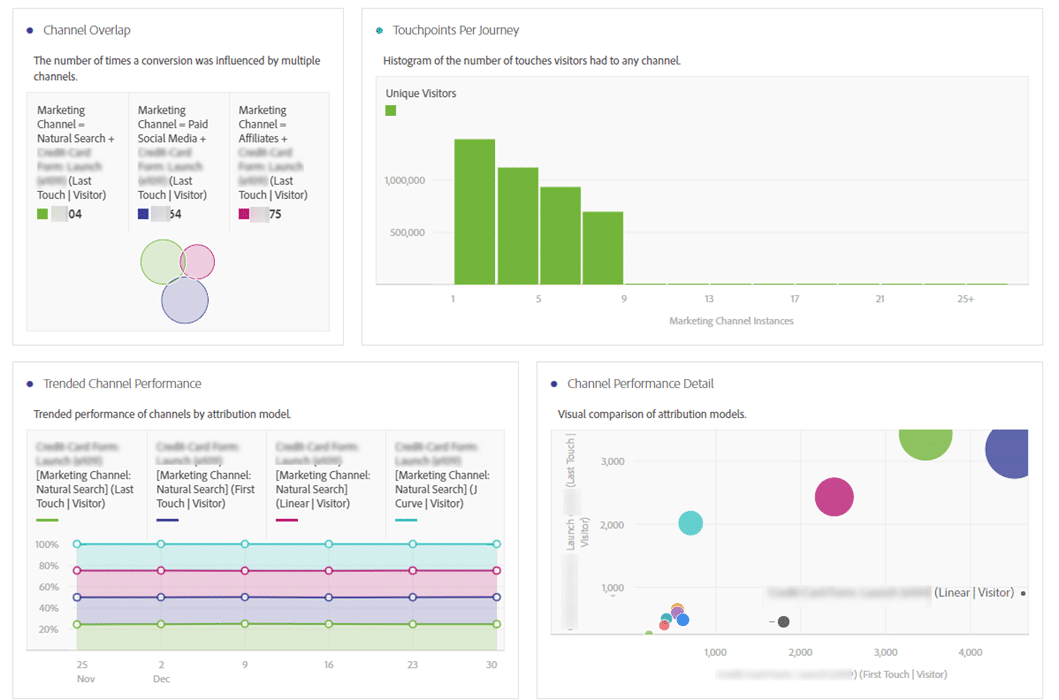
Several other visualizations are also built, allowing you to visualize your data with all the power and diversity offered by Workspace :
In conclusion, Adobe Analytics offers a tool that combines power and flexibility.
Have questions about this new feature in Adobe Analytics or about attribution in general? Do not hesitate to contact us!
Last-Click is Dead, Long Live Multi-Touch Attribution!
“THERE IS NO SUCH THING AS A PERFECT MODEL (IT DOESN'T EXIST), BUT YOU CAN BE LESS WRONG. » Attribution is a topic I've been obsessed with since working in digital media, so I'm glad it's becoming one of the hottest topics in 2017.

What is Attribution? The Shoe Store Example
Imagine there’s a shoe store located on a street or in a shopping mall that has three employees: a guy wearing a sandwich board outside the store who lures customers inside by highlighting current store promotions; a salesperson in the store who suggests shoes to customers, goes to the back room to get the sizes needed and helps customers try them on; a cashier that processes transactions. If you had to give the commission for a shoe sale to only one person, who would it be? The sandwich-board person who drew people into the store? Is it possible those customers would have come in anyway? Certainly a few of them came in because of their influence. The salesperson who ultimately spent the most time with the customer and who influenced their purchase? The cashier? After all, the customer does make their final decision at the cash… Attribution This type of question is referred to as attribution. It’s an approach, and practically a science, whose goal is to determine which marketing effort …

Will click-based attribution models soon be obsolete?
In the most recent special edition of the scientific journal Applied Marketing Analytics (AMA), I published a peer-reviewed article entitled “Moving towards inferential attribution modelling in a world without third-party cookies.” The article suggested that marketing data experts should consider a gradual shift towards statistical inference in order to continue tracking the performance of their ad campaigns after the cookie apocalypse. As you know third-party cookies will disappear from Chrome by 2023. As far as Apple goes, third-party cookies and mobile tracking known as Identifiers for Advertisers (IDFA) are already ancient history. As a result, measuring the effectiveness of your Facebook Ads or Google Ads campaigns directly on these platforms has increasingly become an issue. At the same time, a portion of these data are no longer stable within Google and Adobe Analytics, since the break-up of the measurement ecosystem, largely caused by Apple, has also affected the quality of fir …