
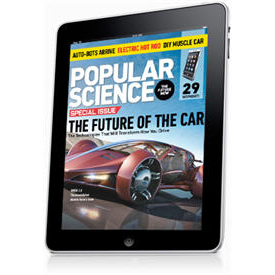
Following two very relevant questions from Frédérick in my last article concerning my impressions of the Ipad , I realized that there was material to write a new article to really answer his questions, but in a broader way.
MY ERGONOMIC POINT OF VIEW
The iPad is considered by many to be the savior of the publishing world, even before it was released in early April. Thus, we were able to read articles proclaiming loud and clear that it was revolutionary, including Wired, which made its cover of it last April. It was therefore with a certain enthusiasm and with curiosity that I quickly downloaded all the first applications from magazines and newspapers in order to get my head on the subject.
As an ergonomist, this period is really interesting, because we find ourselves in an exploratory phase of this new medium that is the iPad. Yes, the iPad, this Big iPod Touch is indeed a new medium! Why ? Simply because the difference in screen size between iPod/iPhone and iPad leads to a change in perspective, needs and limits of use. So, no, you can't put it in your pocket, but yes you can read an entire website like on a computer without having the keyboard between you.
Thus, the designers must review the interface, the interactions and even sometimes the concept of their application in order to meet the new behaviors and needs of users in their use of the iPad. Need to rethink out of the box!
Using the different magazine and newspaper apps, I've listed different ways to interact based on what each publisher thinks is the best interaction with their media. I also "forced" myself to read and use the majority of these apps to see how I, as a user, tended to want to react with the media when no rules or best practices exist. again for this platform (with the exception of the framework imposed by Apple for applications) and that therefore no standard is imposed as much on the user as on the designer. It was, and still is, very instructive because, unlike the computer which requires the use of a mouse and a keyboard, the iPad offers a natural and physical interaction.
A MORE STRATEGIC POINT OF VIEW
To answer the question: "Should the publishing world embark on the development of a specific content offer for the iPad and other tablets?" »
I would say that it depends on each case and that a business analysis should be done in order to properly determine the needs, costs and ROI of creating a specific application for the iPad.
Indeed, this one puts forward what is beautiful (beautiful photos, beautiful layouts, design, video, etc.). For magazines, this seems to be the new Eldorado. However, each publisher needs to think about whether they should be part of the avant-garde to gain visibility, among other things, or whether they should rather wait for the exploration phase to end before putting their balls into the game in order to reduce production and trial and error costs .
If we take the example of Wired, it is clear that, given its readership, the magazine has every interest in being among those who will be at the forefront. Besides, I'm starting to find that they are late since their application hasn't been released yet while the launch of the iPad took place 1 month ago. At the same time, I know that the readership of Wired, of which I am a part, has high expectations and a high level of demand for the application that this magazine should be able to provide us. If I add to this, the reinforcement of Apple's policy against Flash and the work already done by Wired with Adobe before the launch of the iPad, I suspect that Wired is under pressure and must revise its way of approaching Flash. 'iPad which would explain the long delay in the release of its application.
It is clear that this exploratory phase is necessary and important in terms of time and budget so that both users and designers can understand this new medium. If we go back to the beginning of television, broadcasts were just radio presenters filmed and broadcast on the new medium that was television. When we see now how far it has evolved, we realize how we can underestimate the iPad and how the first tests are, for the most part, too close either to the Web or to the paper magazines. It will therefore be necessary, as for all other mediums, to create a new paradigm.
BUSINESS MODEL, APPLICATIONS AND WEBSITES
Will I pay for a subscription or for a specific application rather than going to the website?
From my point of view, yes, I would be willing to pay for an app from a magazine like Wired, when all their content is available on their website, for several reasons:
- For the beauty of the layout compared to web pages
- For content-contextual and medium-specific interaction
- For its inexpensive price (even if accompanied by advertising, but as long as they are beautiful, original and light up something in me)
- For the quality and depth of content and in-depth articles that come into direct opposition to breaking news on the Internet, which often lacks perspective.
- For content accessibility in offline mode
- To be able to archive the articles that interest me without ending up with a pile of magazines in my living room
- To be able to "constitute" my magazine according to search / selection criteria (example: I want to see all the articles that talk about ergonomics and new technologies since 1995)
- To be able to continue my reading from one medium to another (I start in the morning on my iPad while having breakfast, then on my iPhone while taking the metro and finally on my desktop computer before starting to write a blog post on the reflections generated)
- And because I'm a fan of this magazine and I want it to stay alive...
So I will pay for a magazine app that has real value to add compared to other mediums (web, print, etc.) through which I can reach the same kind of content or even the same content. This value could come from exclusive content, but not only! Why ? Because the iPad is an interactive and experiential medium. We like to touch it, to caress it, to have it in our hands.
I think the iPad succeeds in creating an emotional, even affective, connection with its holder. It's not cold like a computer. There is no keyboard and mouse that separates our relationship to the screen and therefore to the media displayed on it. I am therefore convinced that this is the direction in which publishers must go. Finally, I believe that the challenge now lies in offering an experience that is tactile and experiential enough to retain this emotional connection between the user and the iPad, so that it is then transposed to the media, while being coherent in the interaction and the natural (tactile) behavior of the user all towards a specific goal: that the interactions created can become the new standards of tomorrow.
