
In a recent interview with AdExchanger , Chetna Bindra, Product Manager for User Trust, Privacy and Transparency at Google, said that as the cookie apocalypse of Chrome announced for 2023, marketers need to work harder. According to Bindra, "[Google] will not build an alternative solution to continue to collect data about individuals as they browse the Internet." Also according to Bindra, this also means not using Chrome users' login information to feed Google's advertising platforms.
If so, the trend towards a complete blocking of individual user data is set to continue – and it's likely to only intensify over time! In such a context, marketers will have fewer tools at their disposal to observe user behavior and link it directly to the performance of their campaigns.
For now, Google offers alternative audience building solutions through proposals like FLoC and FLEDGE, which promise a depersonalized approach to segmentation and targeting based on user cohorts. But these solutions will no doubt evolve over time, too. Another technique to mitigate the consequences of the data apocalypse is the use of server-side data collection tools, through tag management solutions. However, who knows how long such approaches will remain viable. In a few Safari or Chrome updates, they may be completely deprecated.
In this context, the wisest will avoid putting all their eggs in one basket. To tread carefully in this new environment, marketers have two options: increase their ability to collect direct data, or rethink how they think about performance measurement. In this regard, we are seeing a strong comeback of media mix models.
This approach has been around for decades and is used to measure the overall influence of channels such as TV, radio and outdoor display (OOH) on sales. Essentially, it's about using the predictive power of statistics to determine which channels to focus on to increase business results.
With the advent of digital marketing, companies have moved away from this approach to more direct tracking methods. For each impression or click, it is possible to observe the user's behavior to know exactly how many conversions can be attributed to the different media placements.
Naturally, this method is entirely based on cookies, more specifically third-party cookies. With their disappearance, this method of analysis specific to digital marketing will become less and less precise.
Further, the scope of this attribution system is limited by the limited share of digital conversions that are directly associated with specific clicks (and, sometimes, impressions). In this context, the majority of conversions will be attributed to placements at the smaller end of the funnel, such as remarketing or paid search.
By definition, such a method therefore ignores the bulk of your brand marketing efforts – the widest part of the funnel – such as videos or TV, podcasts and radio, or sponsored content. Yet these are the placements that often take up the largest share of your media budget. So how can marketers demonstrate the value of these less targeted initiatives?
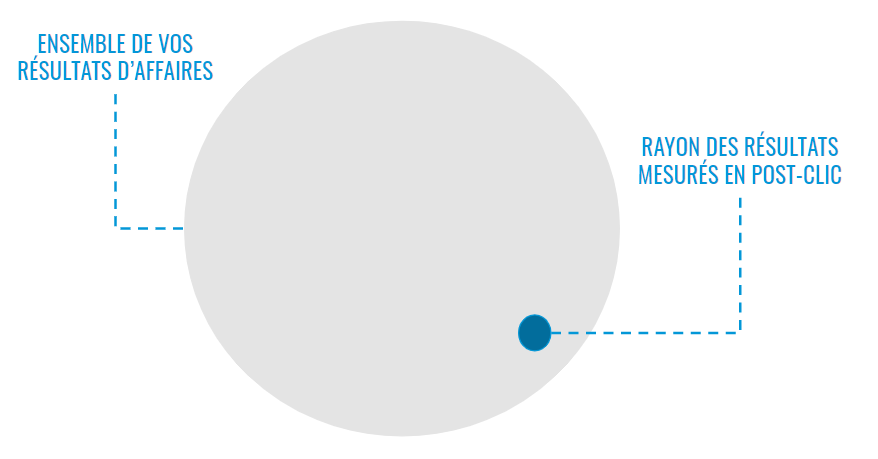
Media Mix Models (MMMs) are a great way to demonstrate the value of your marketing strategy by reporting results that reflect all of your efforts. In short, rather than focusing on measuring the conversion rate for each click collected, you should broaden the scope of your analysis to measure the impact of your campaigns on the overall performance of your business.
Rather than limiting the analysis to direct attribution from specific conversions to certain channels in the campaign, MMMs look at all marketing efforts and analyze the overall impact in terms of sales, opportunities or transactions. 'business.
In doing so, MMMs help identify the channels or combinations of channels (hence the name media mix ) that will have the greatest influence on your overall performance.
In the field of statistics, we use to apply this technique models called multiple regression models. However, with the advancement of technologies in the data sphere, new approaches are emerging, including some advanced machine learning techniques . It should also not be forgotten that marketing experts today have a much greater amount of data to produce an effective media mix.
In an ideal world, creating a data warehouse or data center is the best way to collect data from a variety of sources that will build robust models. But it is not absolutely necessary to build a data warehouse to initiate an MMM approach. Good results can be obtained simply by collecting data from the reports of your advertising platforms, your CRM and your sales reports.
Additionally, advertising or digital marketing data may be combined with external data such as search engine trends, Comscore reports, or economic statistics.
If you want to continue to demonstrate the positive impact of your marketing initiatives despite the disappearance of cookies, media mix models are a proven scientific method.
Visit our special section dedicated to the Cookie Apocalypse to learn more about it
