
It's fresh, it's just been released: Google is taking a step closer to measuring social media performance by integrating reports dedicated to the measurement of interactions on their "+1" button in the tool Webmaster Tools, and announces at the same time the launch of a social tracking plugin for Google Analytics. Tracking interactions with the +1 button is automatic and requires no code customization, unlike tracking on other social networks such as Facebook and Twitter. In any case, the new reports are already present in both tools.
+1 STATISTICS IN GOOGLE WEBMASTER TOOLS
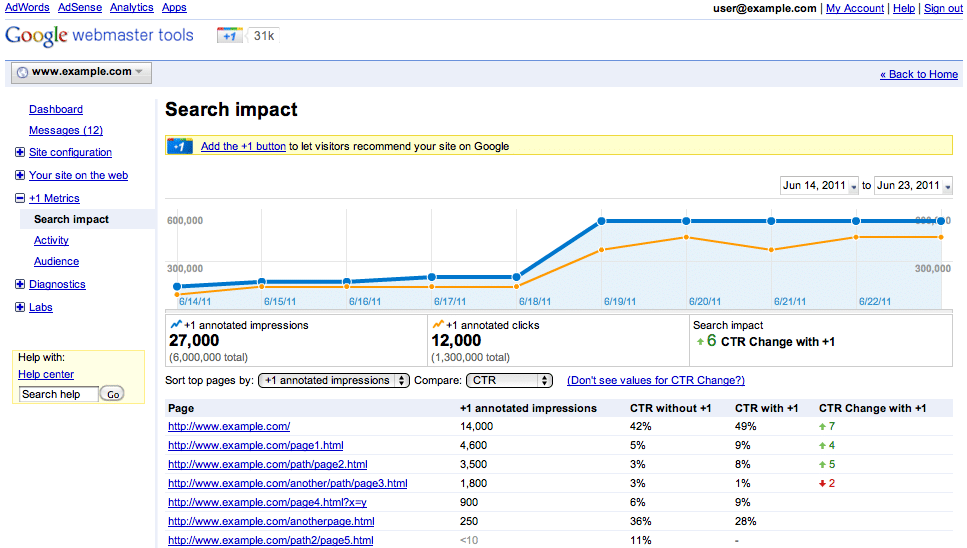
Since the launch of the +1 button, the news has been eagerly awaited, and it is now done: the "Statistics +1" section has just made its appearance in Google Webmaster Tools, and it comes in three new reports:
- Search Impact Report: This report will analyze the impact of the +1 button on organic traffic, comparing clicks on organic results with or without +1 annotations.
- Activity: You will know thanks to this report how many times your pages received clicks on the +1 button, coming from the search results or from your own site.
- Audience: This report provides demographic and location data on visitors who clicked the +1 button.
In terms of privacy, if there is not enough data collected and the little data could personally identify a visitor, then the reports will not be available.
GOOGLE ANALYTICS: SOCIAL TRACKING PLUGIN
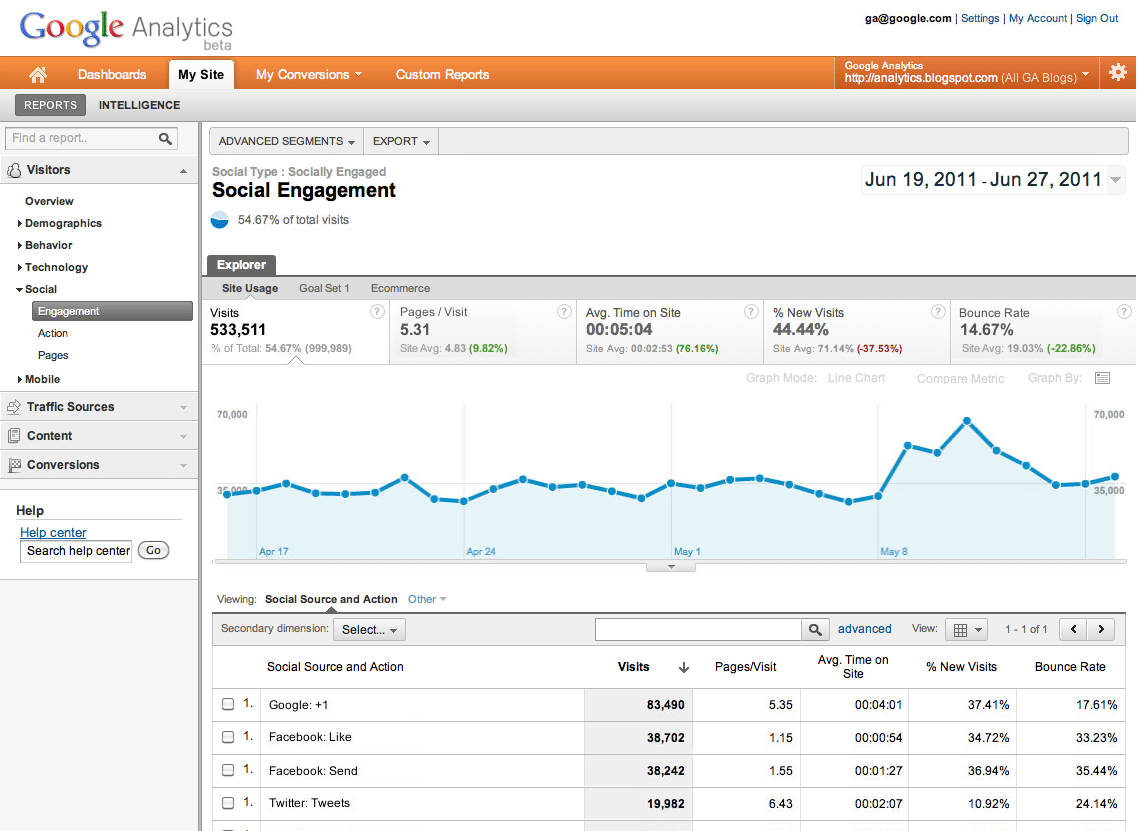
On the Google Analytics side, there is also talk of a "Social" section that has just made its appearance, and which also comes in three new reports:
- Engagement: The purpose of this report is mainly to study the behavior of visitors who have shared your content on a social platform (Google, Facebook, Twitter, etc.) versus those who, on the contrary, are not engaged. We will then see if the visitors who clicked on the Google +1 button or who tweeted one of your contents seem more qualified than the others, in terms of time spent on the site or number of pages per visit.
- Action: The social actions report paints a holistic picture of all social interactions that have taken place on your site: +1, Facebook shares, tweets, Digg, etc, all in one unified report.
- Pages: This report will show which content on your site generates the most social interactions, in other words, which ones encourage your visitors the most to share or "like" your content.
The tracking of interactions on the +1 button will be done completely automatically. As for other social networks, this is where the Social Tracking Plug-in really comes in. Google announces a new tracking method (_trackSocial), composed of 4 arguments, two of which are optional, responsible for correctly measuring Likes, Tweets, Diggs, etc. Google Help has been updated with a page on social tracking, and to make it easier for developers, Google has also released a social tracking demo page.
Finally, it is now possible to obtain reports directly in Google Analytics on the number of Facebook "likes" or the number of tweets received for its content. So far, and despite our laboratory tests, no miraculous and really workable solution has emerged. This problem is now solved! I tested everything internally using the examples provided by Google that I customized, and the call to the _trackSocial function returns the expected results in all cases:
- Tweet: the call to the function is made once the tweet has been submitted;
- Sending Facebook: same thing on the Facebook side, the call to the function is only made from the moment the sending of the content to a friend has been submitted;
- Facebook "Like": depending on whether or not it is possible to add a comment in addition to the action of liking or recommending a page, the call to the function is submitted immediately to the click on "Like" or as soon as the submission of their comment in addition to the "Like".
Great news in the world of web analytics therefore, and new reports that we are going to study with a magnifying glass for the benefit of our customers. Adviso's measurement department was very excited today, and eager to implement it !

Social Analytics: Google Analytics measures engagement and ROI on social media
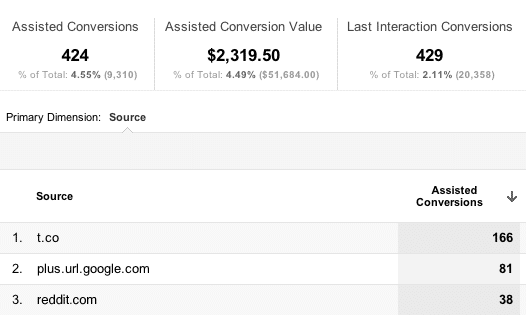
It's fresh out of the oven: Google just announced this morning, live from SES New York, a brand new feature along with a new set of reports that will be added to the existing Google Analytics reports: the " Social Analytics”. In a nutshell, Social Analytics is all about measuring your visitors' interactions and engagement with your content on social media, both online and offline. Google Analytics therefore no longer simply measures the social interactions that take place with your content on your site only; the tool is now taking another step towards an integrated solution, oriented as usual towards conversion. Is the measurement of return on investment and conversions from social media still a utopia in early 2012? According to Google, not at all! Google Analytics, as we know, has always been conversion-oriented. And that's good, it's also a daily obsession at Adviso that shines through in all the strategies and actions that we put in place for our clients. The big shift that Google …

Evaluate the ROI of your keyword buying campaign using multi-channel Google Analytics.
Google Analytics is now launching Multi-Channel, we were able to try it before anyone else since we are Google Adwords and Google Analytics certified. We are happy to share with you this new tool that exposes your site's input sequences, revolutionizing web performance measurement at the same time! We are all able to calculate an ROI, it is the cornerstone of online advertising.
-Apr-02-2026-08-03-33-3374-PM.jpg)
Measure the success of your Youtube videos
This is a problem with online videos and web performance measurement: we know if a video is "clicked" or not, but nothing more. Youtube wants to remedy this problem with Youtube insights, the Google Analytics of online video.