
Since her arrival in New York and on the media scene in 2013, Elizabeth Plank has broken all the records. Before she set foot in the news room of Mic.com, a web platform for generation Y, the site had 3.2 million visits per month. Three months after she was hired and rose rapidly to the head of the editorial team, the company saw its monthly visits increase by more than 200%.
Her path is genuinely fascinating. Before settling in New York, she completed a degree at the London School of Economics, all while writing articles for the Huffington Post. That’s when she had her first success with running a viral campaign. She launched a Change.org petition that collected more than 55,000 signatures, and succeeded in reversing a significant decision by the Amateur International Boxing Association (AIBA) to prevent female boxers from wearing skirts while competing at the 2012 London Olympic Games.
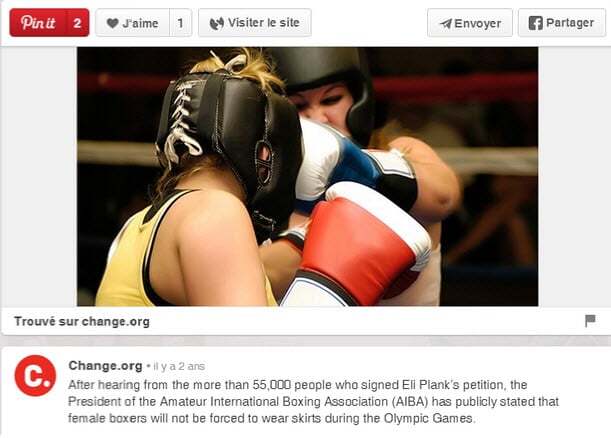
Source: pinterest.com
Since then a string of successes have followed, from her much discussed and highly shared articles, to her numerous television appearances, to her recent nomination to Forbes prestigious 30 Under 30 list of the most influential people working in media. Early this year, the debut of her web series Flip the Script pulverized every Mic record, with her most popular episode garnering more than 16 million views.
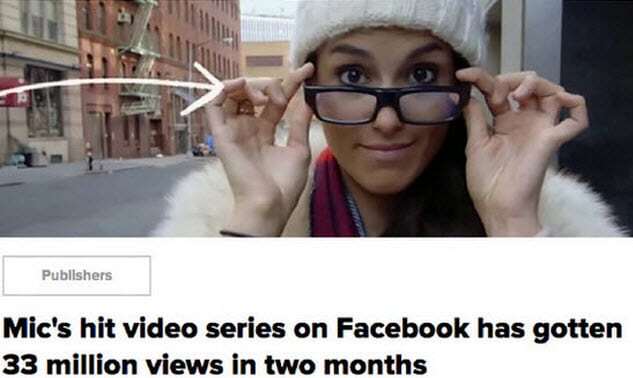
Source: digiday.com
Her original way of exploring the issues affecting her generation and an approach that’s perfectly adapted to her audience have definitely contributed to her success. It’s a new way of influencing, communicating with, and educating the public, and it is growing fast. At her RDV Média Infopresse conference, “Nouveaux médias, nouvelles approches” I asked her a few questions about what makes for successful shared online content.
What factors play into creating content that generates social media interest?
There are several, but for starters, I am a strong believer in the importance of identity. The factors that determine whether or not a person shares an article are directly related to their sense of who they are and what’s important to them. We might be motivated by a cause we support, but also by the realization that we share the same everyday irritations as other people. When I started writing, I realized that the preconceived idea that only cat videos and other pointless content had the power to go viral was wrong. Sharing content online is a concrete way for millennials (generation Y) to express themselves, and share their opinions with friends and special interest groups.
In my work, I’m very interested in social issues in general. I believe these are the types of subjects, those that touch on readers’ identities, that are at least partly responsible for my articles being so widely shared. Another important point is story telling. The human brain simply understands information better when it’s explained in the form of a story. What’s interesting about the emergence of new media platforms, is that it’s now possible to tell a story using more relevant, high quality content.
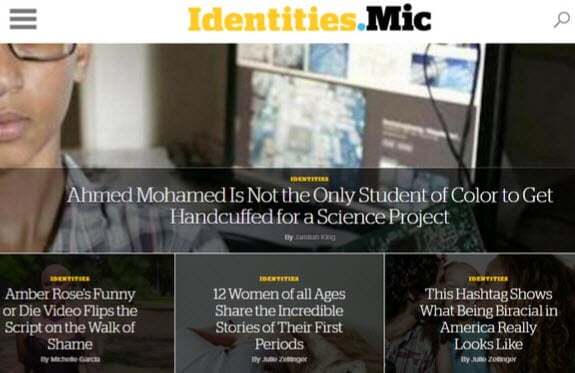
In your work and in your talks, you often mention emotion as a factor that influences whether or not people will want to share something. What emotions should we try to elicit when we’re creating content?
The most powerful emotions are the ones that are most likely to elicit a reaction from people, from a simple share, to a raised awareness of an issue. In the end, that’s the effect I want to have. When I write about a politician who is trying to regulate abortion, or a woman running in the US presidential race, I want to elicit strong feelings, because that’s what will push people to act, whether it’s by getting better informed, by going out and voting in the next election, or by contacting their local elected official to discuss a local issue. When I write, I’m not necessarily thinking about developing content that will be highly sharable online, but more about provoking emotions that will incite people to action. My work over the past few years has shown that this type of content happens to also be highly sharable, and that’s good news!
Do you have examples of companies who have succeeded in pulling this off, the way Mic does with millennials?
This is an interesting time for media, where a huge pool of people are interested in an infinite number of things. Also, we’re finding that people are no longer necessarily grouped and targeted by nationality or age, but more by their shared interests.
Buzzfeed has created a very strong model, certainly not perfect, but still interesting in that it has succeeded in building a platform that reaches a vast pool of people, and now has content that goes well beyond the baby animal pictures and trivial lists that were making the rounds for a long time.
I also really like Vox’s model, a current events site whose mission is to make the news accessible to younger generations and people who are less informed on certain issues. It’s a model with the objective of empowering its readership to allow them to better understand their environment and the world they live in.
Finally, what advice would you give to a company or a person trying to build their brand image on social media?
Be authentic. Whether you’re a company, a regular person, or Hilary Clinton, authenticity is among the most sought after qualities. Younger generations were brought up in a largely prefabricated world, surrounded by modified, scripted images. They are looking for an out. Then you have an app like Snapchat, which is a great platform for distributing raw, authentic content, and I think that largely explains its popularity.
To follow Elizabeth on social media:
Facebook: https://www.facebook.com/feministabulous
Twitter & Instagram: @Feministabulous
Snapchat: Lizplank

Ad Exchanger’s Industry Preview: what to expect in digital media in 2018!
On January 17 and 18, I had the pleasure of going to New York to attend AdExchanger’s Industry Preview Conference. Here are a few highlights. Increased attention toward Amazon The first big speaker was Scott Galloway. He tackled the Four (Amazon, Google, Facebook, and Apple) positions in various markets. According to him, Amazon is the best company to surpass the other three. Regarding web marketing, Amazon will probably go for Google and Facebook’s revenues, and break up their duopoly. Who would have thought a few years ago that Google could lose its marketing control? However, 55% of product searches start on Amazon, and more than 75% of vocal searches are made through Alexa. Plus, Alexa is directly connected to Amazon accounts, and more than 58% of American households are Prime subscribers: Source: Scott Galloway – The Four – What To Do The question is not whether advertisers should advertise on Amazon anymore, but how and how much. A new algorithm, fake news, and an emphasis on Fac …

Google Adwords: when innovation brings in US$60 billion per year
In 1995, a 22-year-old college student named Larry Page considered graduate school at Stanford. Sergey Brin, aged 21, welcomes him and shows him around the campus. In 1996, these two young men worked together on the BlackRub search project , the first content indexing engine that quickly took up too much bandwidth on Stanford's local servers. In 1997, Sergey and Larry founded Google and marked the beginning of a new digital era. Today, October 23, 2015, we celebrate the 15th anniversary of Google AdWords, Google's index monetization platform. Fifteen years after the creation of this content index which makes it possible to find Web sites quickly, Google now reports US$60 billion in revenue per year. Why is the Google model so strong? Were Larry and Sergey the only visionaries of the last 15 years? Of course not! Which reminds me of an article from Les Affaires that caught my attention with its sensational title: Why Your Brilliant Idea Is Worth Nothing. In short, it is not the value of …

Google Adwords: When innovation pays off $60 billions a year
In 1995, a 22 year old student named Larry Page considers pursuing graduate studies at Stanford. Sergey Brin, 21, greets him with a guided tour of the campus. In 1996, the two young men started working together on a research project named BlackRub, the first ever content indexing engine, which will soon take up way too much bandwidth on Stanford’s local servers. A year later, Sergey and Larry co-founded Google, thus marking the beginning of a new digital era. Today, October 23 2015 marks the 15th anniversary of Google AdWords, Google’s index monetization platform. Fifteen years after the creation of this index that makes finding websites quick, Google now reports $60 billions in revenue annually. Why is the Google model as strong? Were Larry and Sergey the only visionaries of the last 15 years? Of course not! I’m thinking here of an article in Les Affaires that caught my attention with its provocative headline: Why Your Great Idea Isn’t Worth Anything (Pourquoi votre idée géniale ne va …