
Documenting might not appear as a time-saver at first, but you would be surprised how much time you will actually save.
Time is Money
No matter which analytics tool your organization is using, the people on your team are most likely fielding countless requests along the lines of:
– What variables should I use for my report?
– What variables are available?
– What is the logic behind our checkout events?
– What {event, dimensions, variables, metrics?} are sent on {checkout/form submission/scroll?}
Answering these questions inevitably takes time, which means time taken away from analyzing data – the task that should occupy the majority of your analytics team’s time. What’s the one thing these requests all have in common? They stem from a lack of centralized information. Creating documentation for your tool could bring huge gains in efficiency.
Three Reasons Why You Should Do It
1. Increased Efficiency
Your documentation is a use manual for your analytics implementation. So, your colleagues will be able to use the tools independently, which will greatly reduce the number of time-sucking requests sent to your probably already overloaded team. Moreover, when a new person joins your ranks, they won’t have to spend time exploring your implementation, or make assumptions about how it’s set up. The plans will be right under their nose!
2. Debugging and mapping
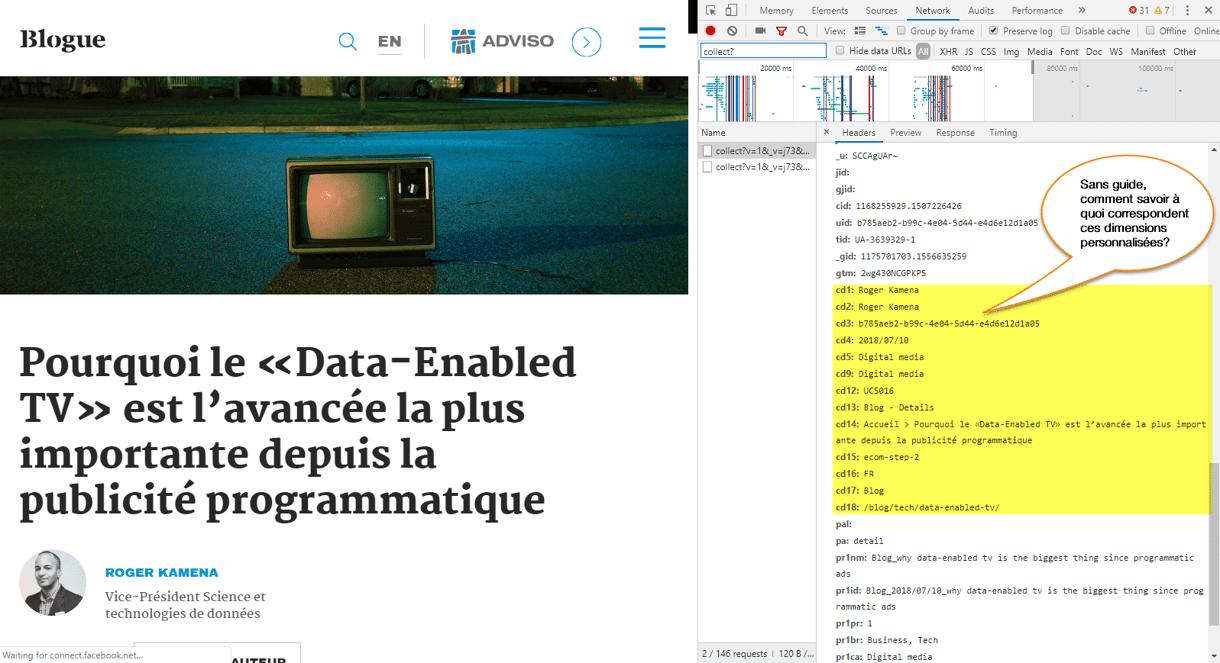
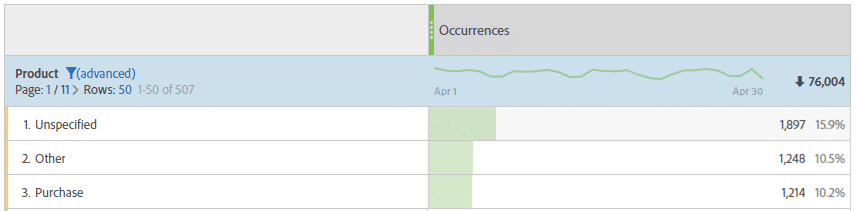
Clear, specific documentation can also help you find bugs or inconsistencies in your implementation quickly and efficiently. Why is value X showing up in my report when it shouldn’t be? Why is value Y being displayed inconsistently? Here again, having a well-documented implementation will allow you, first off, to identify bugs so you can better resolve them, but also to know them well enough to be able to communicate them, and avoid errors in your reports.
How to explain these results?
3. The Purpose of Implementation
This is probably the most important point, because it answers the following question: how is the implementation of your analytics system adapted to your business needs? Complete documentation will include, at minimum:
– The business needs (requirements) and answer the question: why do I need to measure this element?
– The dimensions associated with this element, each dimension being related to at least one business need.
– The metrics for performance measurement. Here again, each metric is related to a business need.
“Ok, but my team doesn’t have time for this.”
It’s true that putting together detailed and exhaustive documentation for your tool is not a glamorous task. It can be time-consuming and the benefits tend to be felt long term, not short term. A little is better than nothing at all, though! Here are a few examples of documentation that’s fast to create. You could easily list:
– The methods of finding information
– The steps in your user journey, ideally with the values sent in each step
– The elements that aren’t present by default in your tool, like Google Analytics personalized dimensions, conversion variables or Adobe Analytics events
– The segments structure adopted by your company
Reinforce good habits
There’s no question that this task requires time and effort, especially if you want to stay true to best practices like Adobe Analytics’ solution design reference, but there’s no need to strive for perfection at any cost. Make the document available, and remember the purpose behind it and its benefits, but don’t forget that the creation and maintenance of your documentation is not a one-time job, but an ongoing task, spread out over time.
Start building good habits now. Even 30 minutes a week is enough to get things started! If you need other arguments in favour of the value that analytics investments can generate, this article be worth the read!
Questions? Comments? Let me know by sending me a message or learn more about how we could help you.
