
Voice search was undeniably one of the phenomena of 2016. In November, we already talked about it in an article , in particular giving some advice to SEO professionals , natural or paid, to position themselves on voice queries. In this new year, it is therefore normal to wonder if this trend will not be completely democratized in 2017, to the point of becoming a real norm.
USERS WANT ANSWERS, NOT SEARCH RESULTS
Last summer, we learned that more than 20% of searches made on Google via mobile were vocalized. On Bing, Microsoft's search engine, this proportion even reached 25%.
The emergence of this feature has given rise to a new way of searching for content on the web: conversational search. According to a recent study, 60% of voice search users would even like to get the information they are looking for without having to go to an external site or application .
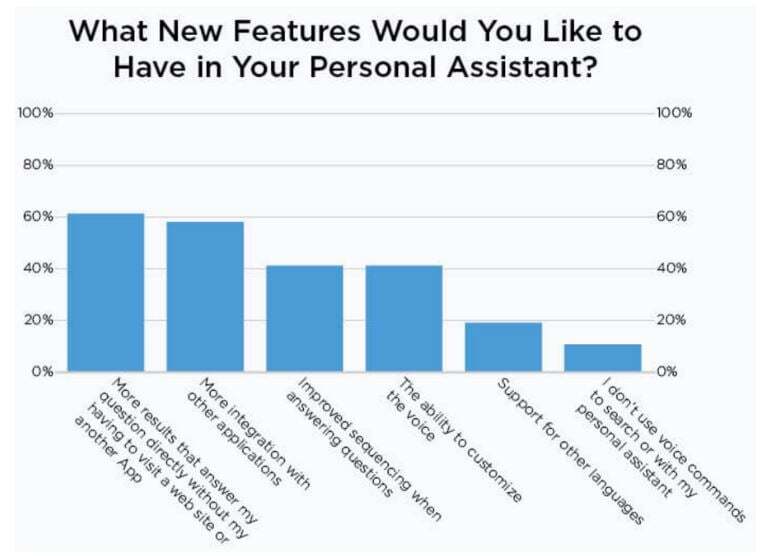
Image source: Stone Temple
Does this portend the end of SERPs (Search Engine Results Pages), those search engine results pages that display a list of links? No. Or at least not in the near future, because good old habits die hard. However, it is impossible not to anticipate major changes in this sector in the years to come.
SEARCH ENGINES REMAIN A REFLEX FOR MOST USERS
According to this same survey, 80% of smartphone users admit to having kept the reflex of opening an internet browser, or a dedicated application (Microsoft, Google) to do a search.
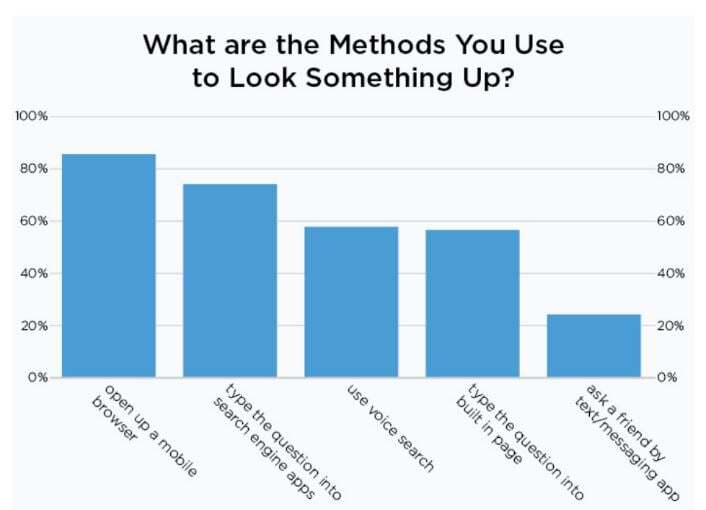
Image source: Stone Temple
Also, the latest figures show that users are certainly ready to vocalize their searches, but they are nonetheless subject to the rules of politeness and propriety, even a certain shyness. Indeed, we see that most mobile users are often hesitant to use voice search in a public place or in the presence of strangers : they use it most of the time at home, when they are alone (65% cases) or with friends (55%).
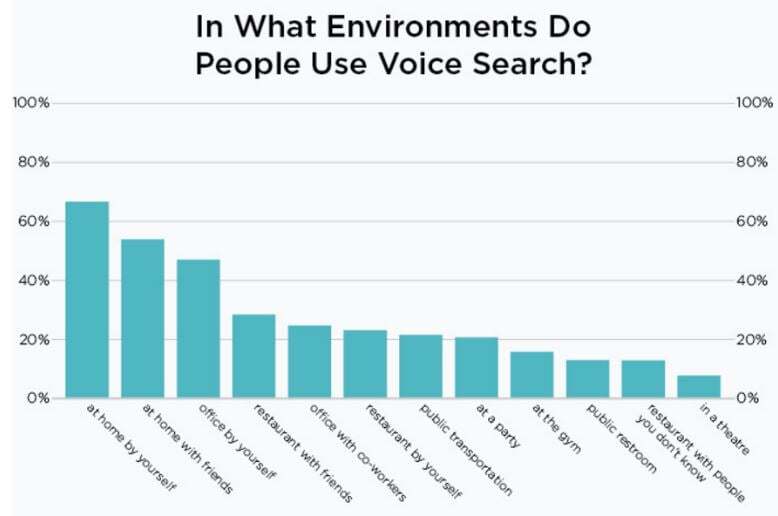
Image source: Stone Temple
A SEARCH MODE THAT GOES BEYOND SMARTPHONES
At the end of last year, we witnessed the commercialization of many domestic personal assistants. These are voice search tools no longer embedded in your phone but in an electronic box, intended to adorn your living room or your kitchen. New to the search vocalization market, Amazon has launched Echo, a wireless speaker that can be controlled by voice. Thanks to Alexa, the personal assistant it has on board, it allows you to play your favorite songs from Amazon Music or Spotify, but also to answer your questions about the weather outside, opening hours of a store or the score of the last game of the Montreal Canadiens.
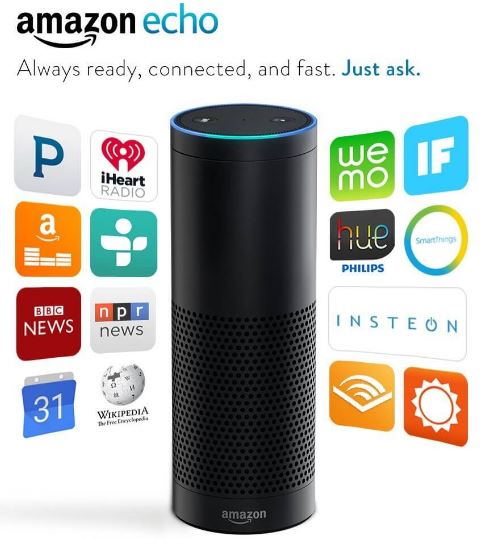
Image source: Soundmag
A few weeks later, Google responded and also launched its voice assistant for the home: Google Home.
This transposition of voice search from smartphones to connected objects for domestic use is a real underlying trend, and Google and Amazon are not the only ones to be interested in it. At CES 2017 in Las Vegas, Mattel, the toy manufacturer, presented Aristotle, a speaker that incorporates two artificial intelligences: one for children (it can read stories, play with them by making them guess, for example , the sound of the horse) and the other aimed at parents, allowing them to order diapers and milk online.
These new gadgets could therefore accelerate the adoption of voice search by the general public because they are inexpensive: they cost less than 200 USD, which is still more than half the price of an iPhone with Siri on board.
Voice assistants are therefore no longer the preserve of smartphones and can be embedded in any electronic product. It remains to be seen how brands will monetize this new research. Recently, Amazon recently admitted to thinking about selling advertising on its Alexa voice assistant .
To be continued…

Google Plus: time to take stock?
As a performance measurement analyst, but no less adept and user of social networks, I firmly believe in the voice of the consumer (Voice Of Customer). It is well known: what better than to get direct verbal feedback from your own customers or users. So I wanted to reconcile the two, and conduct my own survey on the use and adoption rate of Google's (not so new) social network, I named Google Plus. To do this, I used… the Facebook questions, in a survey which is, I must add, nothing scientific, but the results of which speak for themselves while corroborating my own opinions on Google+.

Hey Siri, how can search marketing adapt to voice search?
“Okay Google…”. Who has never used their voice to search their phone. With the advent of voice assistants (Google Now on Android, Siri on iPhone, Cortana on Windows), voice search is becoming increasingly popular. ComScore also estimates that, by 2020, 200 million searches per month will be made by this mode , or more than half of all searches performed.

Google I/O 2013: Google positions its pawns on the travel chessboard
Google's highly anticipated annual conference in San Francisco, Google I/O 2013 , took place over the past week. New features of all kinds have been unveiled: the revised functionalities of Google Maps, the demonstration of Google Glass which will be available in 2014, etc.