
With 67%* of digital media buys in Canada now executed in a programmatic way, the importance of understanding what makes up the cost, the context, the impact and the long-term value of these placements is critical for advertisers. Unfortunately, this isn’t currently the case.
We often talk about transparency in programmatic. To better understand what we’re referring to when we talk about this, here are a few examples based on readings, things people have confided in us, and even direct observations we’ve made working with client accounts where we were either their agency, or hired as consultants:
- Discounts given to agencies or advertisers, which may or may not be transferred to advertisers
- Commitments to buy in volume on particular networks
- Margins on buys in addition to agency management fees
- Technology fees that are not itemized or barely itemized
- Ownership, management and reuse of audience data gathered during previous campaigns or partnerships
- Performance metrics or attribution models used
Discounts and volume commitments have been around as long as media buys, and although I believe they are problematic and do persist with modern media buys, I will be dealing more with the other transparency issues I’ve listed that are specific to programmatic.
These issues can be grouped into three key categories. Each one is associated with one essential question you need to ask yourself if you’re going to form an informed opinion on the subject:
Buying strategy
It happens way too often that we see media plans from agencies that simply say “programmatic” to explain their media investment. Needless to say, this is a completely insufficient amount of information to explain the placement strategy, targets, channels, audience data, and messaging used.
In a world where precision, ROI, metrics and performance rule, why do we tolerate these vague placement strategies?
It’s important to understand that the vast majority of agencies don’t make their programmatic buys directly. The majority do business with a third-party company that make the buys for them. So sometimes you’re dealing with a real lack of understanding of programmatic buys on the part of the agency, and other times it’s a lack of transparency on the part of the third-party partner executing the buys.
In all cases, it’s important for advertisers to demand a far more detailed breakdown of the planned buys. Additionally, it’s essential to make sure that purchase strategies include reusing audience data or remarketing gathered in the past, in the interest of maximizing the impact of placements. Finally, it’s important to ensure that the agency or third party respects the advertiser’s standards for performance monitoring and attribution, to ensure that the advertiser is able to get a satisfactory portrait of their performance (attribution model used, number of days in the lookback window, etc.).
The real breakdown of media cost
Though publishers are under the impression that programmatic buys are depriving them of precious ad revenue, advertisers aren’t necessarily benefiting from this drop in CPM. Although a few years ago we were seeing CPM around $12, $15, or $20, today it’s dropped below the $5 mark for publishers, and under $10 for advertisers. Which brings me to transparency. Very high proportions (often above 100%) of the CPM are now attributable to costs other than the publisher’s cost.
More often than not, CPM in 2017 is made up of:
- A cost per impression with the publisher
- A tech fee for publishing the impression on the markets via an SSP (supplier-side platform)
- The cost of renting data from a third-party data reseller
- The cost of the marketplace on which the transaction is carried out (ad exchange)
- A tech fee for purchasing an impression via a DSP (demand-side platform) by an agency or trading desk
… And that’s a simplification. It’s clear that with so many entities involved, it’s not easy to follow the path of a programmatic media buy right up to the publisher who hosts it. It partly comes back to a bunch of ad tech companies who aren’t necessarily transparent. The one who pays the bill who gets to decide whether or not to declare the real costs involved in these transactions. More often than not, that’s the trading desk or agency if they do the transaction themselves.
Additionally, and this is the heart of the transparency problem in my opinion, a damning report on the industry from the ANA (Association of National Advertisers) points the finger at the dubious practices of large groups of agencies who take non-transparent margins, and get cash rebates on their programmatic transactions. These practices were able to creep in because of the complexity of the ecosystem, and because advertisers’ procurement departments were putting so much pressure on agency media fees.
It’s not uncommon to see agreements with management fees of 1 to 2%, even 0%. How do these procurement teams think agencies can stay afloat with no payment for their work? Are they that naive?
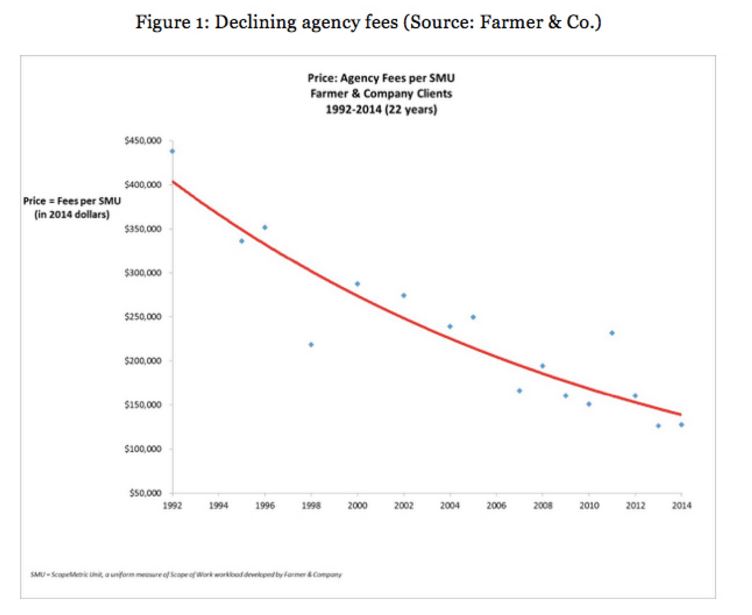
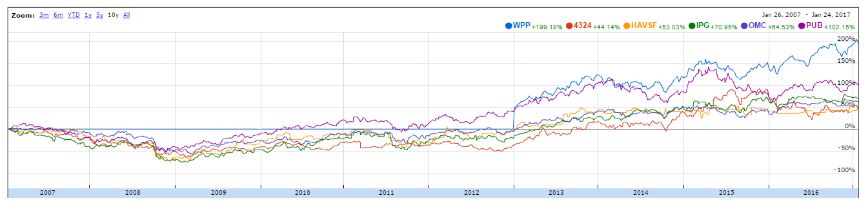
It’s clear that large groups of agencies aren’t getting by on water and sunshine in spite of these agreements; since the rise of programmatic buys (around 2012) their stock listings have never looked so good:
Audience data
With bill C-28 limiting how advertisers can use email to promote their services, audience data has taken on critical importance. It allows us to qualify a customer (age, sex, geolocalization, behaviour, interests, etc.) and reach them by focusing programmatic media buys solely on the desired segment.
The long chain of players involved in programmatic media buys and the lack of understanding of their value by advertisers has resulted in a haziness setting in around who owns the audience data and its future reuse.
If a client parts ways with their agency, can they export and reuse their audience data with a new agency? Rarely. Should they do it? Absolutely.
Can agencies guarantee that their clients’ audience data is protected from direct or indirect competitors in the DSP of their trading desk? It would be smart to verify that this important line is in your contract.
I don’t believe that advertisers should necessarily bring their data in-house, at least not in the short term, since I’ve rarely come across any that have the tools, platforms, human resources and processes in place to be able to use it. However, they should be ensuring that they have ownership of their data, that they’re allowed to reuse it, and getting a guarantee that the data won’t be shared, visible, or usable by third parties, either during or after their business relationship with their partner agency or technology company. With the importance that audience data and programmatic is taking on, it’s becoming more and more important to audit these items.
In conclusion, I believe that programmatic is a fantastic tool that can allow advertisers to get truly good results, and publishers to capitalize on new sources of revenue. But if we want the ecosystem to stay healthy every player needs to take responsibility and act transparently, whether it’s the client and their procurement team, the company offering the tech solutions, or the agencies and trading desks, whether they’re part of a group or independent.
Personally, I’m going to sleep better tonight 🙂
*Programmatic Digital Display Ad Spending in Canada, 2014-2018, October 2016
