
Earlier today, Instagram unveiled its most recent update to the general public. The social network dedicated to photo sharing has abandoned its classic logo in favor of a more lively icon and has declined it at the same time for its related applications Boomerang, Hyperlapse and Layout. On the new logo, we still find the Polaroid and a rainbow, reminiscent of the old logo. The result is definitely more refined and minimalist.
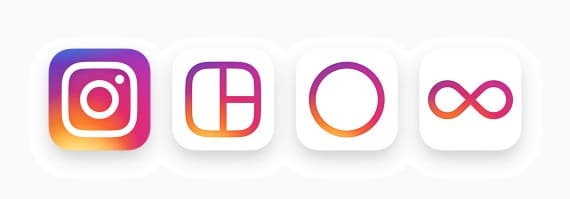
Source: Instagram.com
According to Instagram, "The Instagram community has evolved over the past five years from a place to share filtered photos to so much more: today it's a global community with diverse interests that shares more than 80 million photos. and videos daily. This new look reflects just how rich and varied storytelling has become on Instagram. Inspired by the old icon, this streamlined shape represents a more scalable camera with the rainbow coming to life in its gradient version. »
The application, bought for 1 billion dollars (USD) by Facebook four years ago, has also redesigned its interface. The blue banner at the top of the application has now disappeared to make way for the sober black and white, discreetly integrated to leave the foreground to the colorful photos and videos of the community. Fonts are also standardized in the update for iOS and Android.
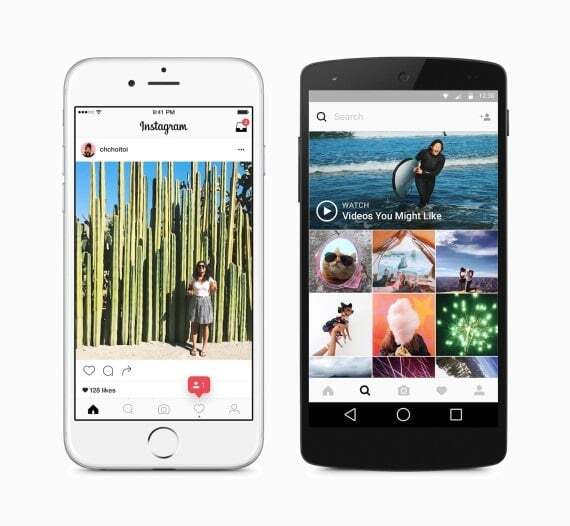
Source: Instagram.com
Barely announced, the most important update of the application to date leaves no one indifferent. On our side at Adviso, the reactions are polarized. Some see it as a continuation of the old logo or a refreshing change, others advocate #resistancetochange. One employee even questions the creative process behind the new design:

We remember that the application had raised the dissatisfaction of users following the announcement of the change in its algorithm a few months ago. And you, what do you think of this new, much simplified visual identity?


The effects of iOS 15 on emailing and immediate solutions
During its annual developers conference last June 7, Apple announced that new versions of its operating systems iOS 15, iPadOS 15 and macOS Monterey would include functionalities to strengthen users’ privacy protection and limit tracking of email activity. Given that Apple is the largest messaging provider in the world with a market share of over 49%, this change marks a revolutionary shift in the email marketing industry, both in terms of performance tracking (which informs decision-making regarding what actions should be planned for email campaigns) as well as marketing automation using email open as a trigger. In this article, we’ll explain what Mail Privacy Protection is about, what this update changes in concrete terms for marketing managers, and how they should respond to these changes. What is Mail Privacy Protection? After having launched the App Tracking Transparency Framework, which revolutionized advertising for mobile application editors, Apple now intends to allow users of …
.png)
Why the performance indicators you use will become unreliable
The challenge of the moment, with the apocalypse of cookies , is to fully understand the repercussions of such a transformation in the digital world. Today, we are going to take a closer look at its consequences on the measurement of data, what we call analytics . Get ready, you will have to question several performance indicators that you observe on a daily basis to measure your effectiveness! We will therefore focus mainly on the repercussions of the cookie apocalypse on primary cookies. Unlike third-party cookies, which tend to disappear, primary cookies will remain relevant, but will experience major changes: the lifetime of primary cookies will be limited to 7 days (or even 24 hours in some cases) on the Safari browser; Cookies on Firefox will be deleted daily unless there has been user activity within 45 days. CHANGES IN YOUR DAILY LIFE What does this limited lifespan imply? In fact, this means that it will be difficult to recognize a user from one visit to another, which will ha …

The apocalypse of cookies and IDFAs: what impacts on your measurement strategy?
Following up on my colleague's article about the cookie apocalypse , I wanted to kickstart the discussion by addressing the cookie apocalypse and IDFAs from the perspective of digital measurement tools. The cookie and IDFA apocalypse A quick reminder of what we refer to as the cookie apocalypse: This refers to all the new web browser features that cut cookie lifespan to increase user privacy. Through its ITP feature, Apple was one of the promoters of this new trend. ITP 2.2 had a significant impact on advertisers; and web and optimization platforms because it affected the lifespan of first-party cookies (cutting it to one day). Google also announced in mid-January 2020 that it was planning to render third-party cookies obsolete by 2022. On the mobile front, in June 2020 Apple announced that users of iOS 14 will decide whether to allow apps to collect the IDFA (expected release in early 2021). To make it simple, first-party cookies (web) and IDFA (Apple mobile OS) are used for user iden …