
Happiness at work is also sought after by employers, who started their entrepreneurial journeys by bringing a project into the world driven by a passion for their field, and the desire to satisfy a demand and carry out a specific mission.
Have you ever asked yourself this question:
“What would be my ideal company, if I had to describe it in one word?”
I asked this question to our experts on the way back from CultureFest 2018. The word cloud in this article is a representation of how people responded. The bigger a word is, the more often it appeared as an answer. Of course, there could be as many different answers as there are people on the planet. What I saw, though, was that several of the terms centered around a common theme, or at least, pointed towards a unanimous result: happiness.
Not so very long ago, job seekers were primarily looking for security, stability and profitability, but the workers of today are looking to get something deeper from their jobs, fulfilling the higher levels of Maslow’s hierarchy.
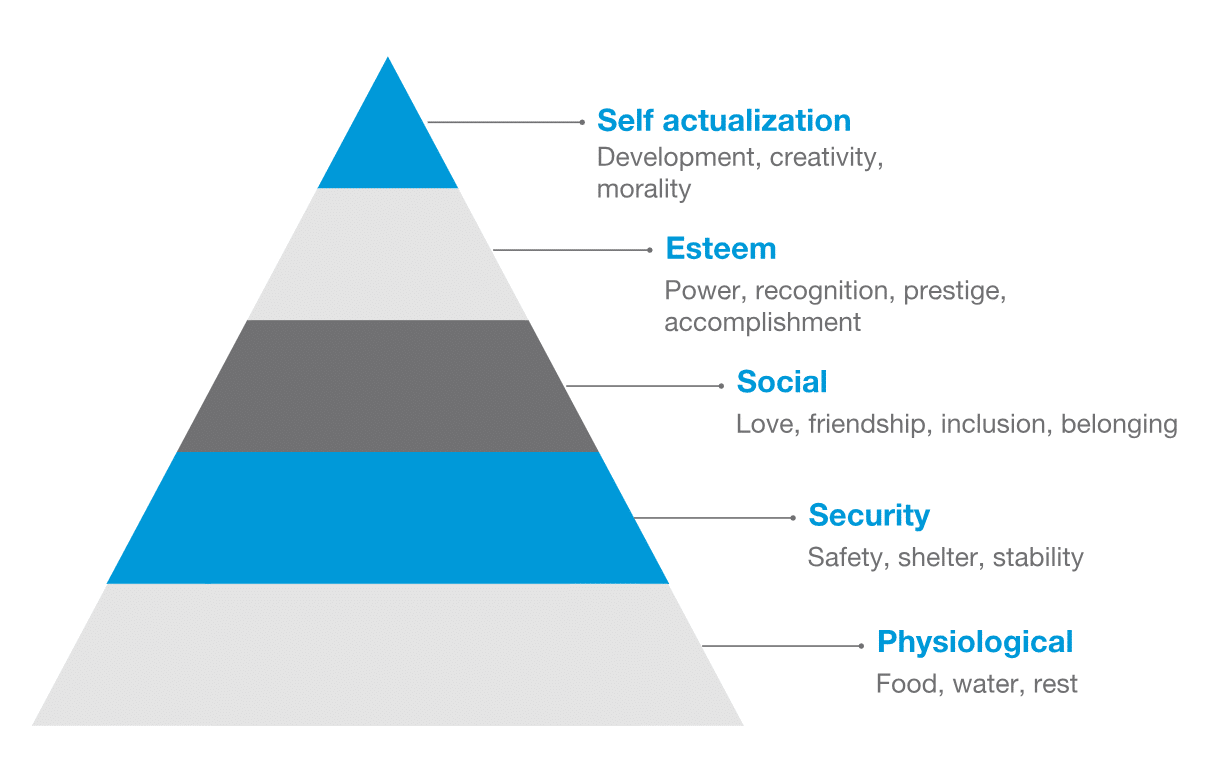
Happiness at work is also sought after by employers, who started their entrepreneurial journeys by bringing a project into the world driven by a passion for their field, and the desire to satisfy a demand and carry out a specific mission.
To get the best people on board to help achieve their business goals, a company needs to expand its vision of success, and identify concrete actions to implement to create a positive, enjoyable work environment for employees. This can directly lead to increased employee satisfaction, commitment, loyalty and productivity.
How do you define corporate culture?
The concept of corporate culture has come a long way since the 19th century and we’re seeing it pick up steam in companies in various ways, thanks to emerging technologies and new generations of workers. But what, exactly, is corporate culture?
It’s essentially a set of principles and initiatives conveyed to all the members of a company in order to help them have the best possible experience with their employer. It’s similar to what you’d try to offer your customers: a quality product and an unforgettable experience that will lead people to stay loyal to your brand and act as ambassadors for other potential customers.
From the moment it was founded in 2002, Adviso planned to incorporate this concept into the core of the company and all its activities. Which means that for just over 15 years, workplace happiness has been etched into the hearts of our two partners, Simon Lamarche and Jean-François Renaud.
Of course, the advantages we offer our employees today are different than they were more than a decade ago, but the principle remains the same. It’s reflected in the values on which the entire business strategy rests:
#competence
#team
#boldness
#transparency
#pleasure
When you work in an environment like this, that makes so much sense on a human level, it’s surprising to look around you and see that large companies with extensive means are not even able to offer their employees work/life balance, for example. A ministerial committee on work/life/study balance was launched in October 2017, specifically to better respond to the needs of Quebec’s workers.
It goes without saying, when even the government is able to justify the creation of this kind of committee, that the desire for change and innovation is getting more blatant. There’s still work to be done in many areas, like for example, social equity in the workplace, professional development, recognition, etc.
How can you make employees happy at work?
For our big family of nearly 90 people, it’s critical that each and every person is able to achieve their full potential. Whether that’s through an annual professional development plan, social and team-building activities, involvement with non-profit organizations or the opportunity to get fresh fruit at the office every morning, our mission remains intransigent: making sure that our employees are satisfied, so that they will be motivated to fully commit to their work day after day.
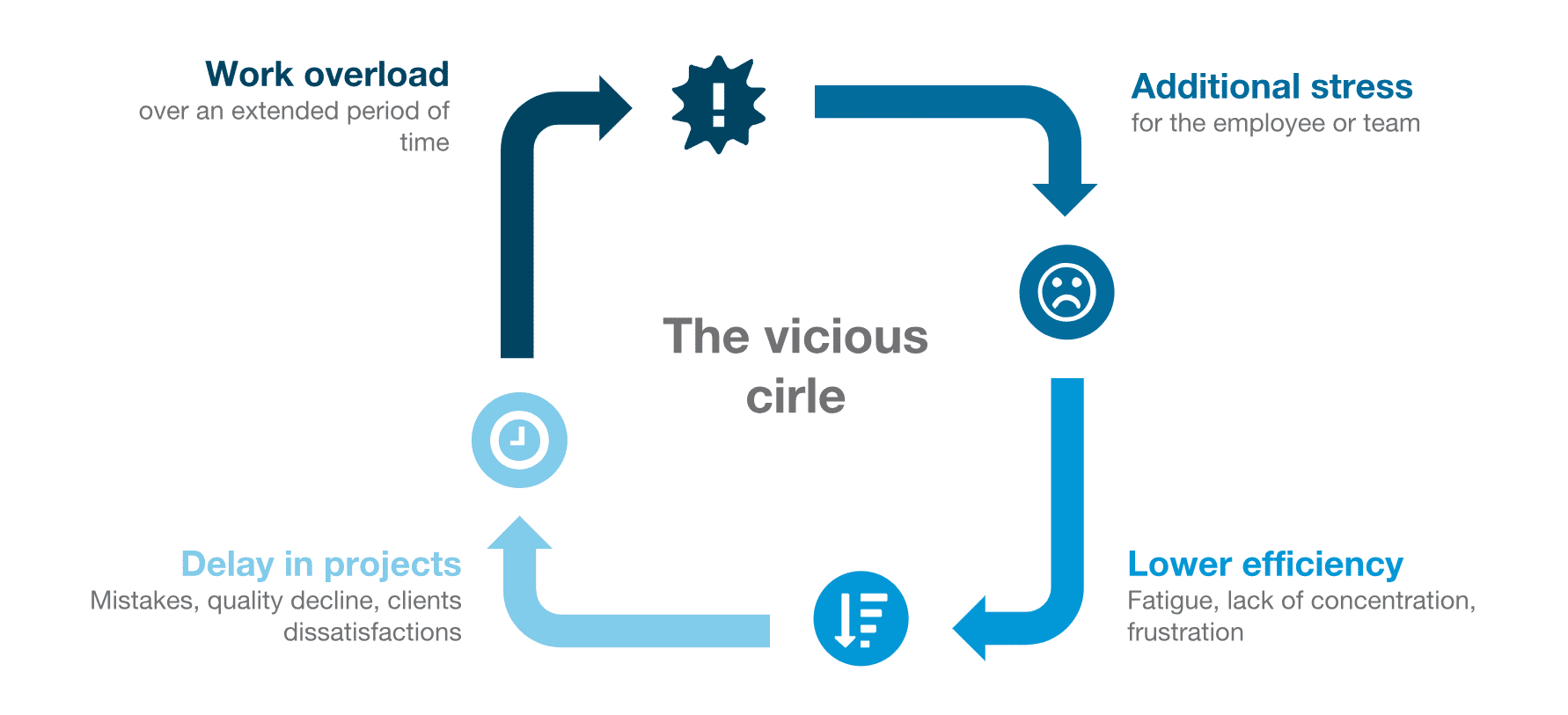
Of course, we can’t talk about missions and goals without talking about measurement! Not only are we experts at calculating the performance of your campaigns, we’re also pros at evaluating the morale of our troops and collecting employee feedback using tools like OfficeVibe. This makes it possible for us to optimize, in other words to intervene and implement targeted solutions when needed. For example, if all the members of a team tell us that they have been at full capacity for a prolonged period, it’s critical for us to provide them with the supplementary resources they need to be able to continue delivering the same quality of work to clients.
Health at work: a healthy mind in a healthy body
People are at the center of every organization. Without its workers, however many or few, a company cannot succeed. So logically, it’s extremely important that these workers be mentally and physically healthy!
“My raw materials take the elevator in every morning.”
Serge Godin, founder of CGI
According to the Mental Health Commission of Canada, nearly a quarter of the Canadian population experiences mental health issues at work. These issues could lead to one or more of the following consequences in the workplace:
- Absenteeism, meaning people are frequently absent from work;
- Presenteeism, meaning that people are present at work but aren’t fully productive;
- People resigning because of problems at work.
“In Canada, more than 30% of disability claims made to insurance companies are related to mental illness.” (Source)
It goes without saying that the cost associated with these situations is huge, to the individual, the company and society. On the other hand, investing in preventative measures by making resources available to employees could prevent issues like anxiety or burnout from being so pervasive.
The same holds true for employees’ physical health, particularly in a digital context like at Adviso, where employees are required to work in front of a computer for the majority of their days. Investing in office furniture that’s adapted to the work environment, providing different kinds of workspaces, adjustable standing desks, for example, and offering to pay for personal athletic challenges, big or small, can make a huge difference to the physical health of your team!
Corporate culture: where to start?
“But what are we supposed to do from here,” you might be asking. “How can we develop an innovative take on this concept? How far do we need to go, and how much should we invest, to make sure our employees are able to benefit from optimal work conditions?”
Obviously, every company has a different budget, but the drive to reinvent yourself and do better for the people responsible for your success is incumbent on all of us.
Simple initiatives can be put in place that don’t necessarily require a monumental monetary investment. Initiatives that, at certain levels, could even apply to your life outside work and help improve your relationships:
- Plan times for your different teams to demystify what they do, or for veterans on the team to share their knowledge #competence
- Take the time to verbally recognize people’s efforts, successes and involvement #team
- Be creative and inventive in your approach to business, be open to everyone’s ideas, listen to people #boldness
- Define your values as a company, find your mission and bring employees together around these values #transparency
- Organize activities for everyone, to allow participants to form new connections #pleasure
Be part of the change
Here’s an exercise you can try next time you’re out with friends, whether you’re a digital marketing specialist, a professional working in another field, a manager or even the president of your company.
Go around the table and ask the following questions:
- Do I feel invested and involved in my job/company? Why?
- Do I have the opportunity to evolve and develop in my job/company?
- Do I have the opportunity to balance work and family in my job/company?
- Is there a real spirit of collaboration among my colleagues and/or with my immediate superiors?
- Is my work recognized by my peers?
- Is there conscious or unconscious discrimination in my work environment and processes?
- What can I do, as an individual, to create change?
Happy chatting!