
Will these little images expressing everything from amusement, to shock, to sadness, change your brand’s social strategy?
Facebook posts often provoke emotion, but some posts make us feel things that can’t be expressed through a simple like – feelings like anger, sadness, and surprise.
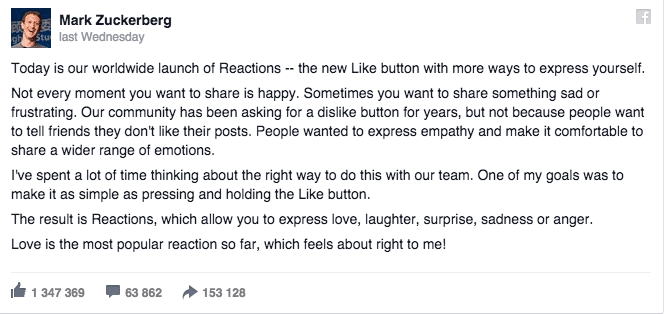
A new functionality to allow users to express themselves better
According to Socialbakers, in 2015, 59% of brands were using emojis in their Twitter posts, and 40% were using them on Facebook. A few weeks ago, Facebook finally gave us the option of reacting to content differently, by deploying a set of Reactions emoticons.
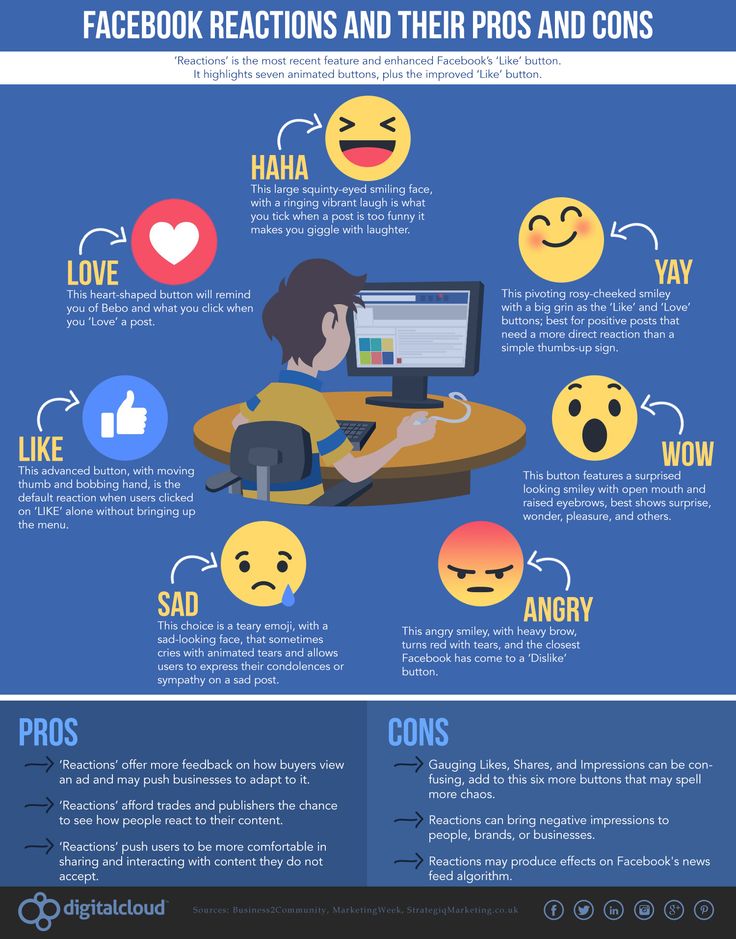
It’s still possible to simply like a message or photo, but now the range of possible reactions has expanded, thanks to five new reaction icons representing “love,” “haha,” “wow,” “sad,” and “angry.” There is still, however, no “dislike” emoji, in the interest of keeping things polite, and avoiding unnecessary conflict.
The Facebook team had been working on the new Reactions for about a year in response to high demand from users, to allow people to convey their feelings quickly and easily from a mobile device. Between us though, it seems likely that Facebook is also trying to improve their statistics tools, to be able to capture a greater volume of more detailed data to offer brands, to help them better target audiences through paid ads.
Should you be rethinking your social strategy?
After this new functionality launched, it wasn’t long before people started asking what this would mean for brands and their social and marketing strategies.
We know that to better understand consumer behaviour, it’s now essential to incorporate emotional metrics into our marketing studies. In fact, it’s been demonstrated that emotion and reason are intimately tied in our decision-making processes. As predictive analytics picks up more and more steam in a large number of industries, these new emoticons will allow brands, simply and intuitively, to better analyze users’ emotions, as well as public engagement with their products and publications.
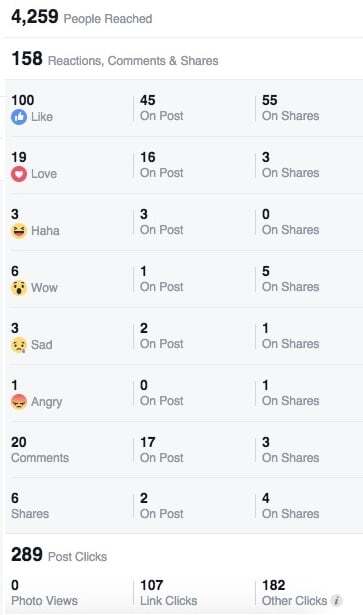
For example: A new product gets a ton of “wows,” leaving the humble “like” in its dust. Conclusion: Keep up the good work! Your audience likes what you have to say, you’ve gotten the conversation rolling!
If, on the other hand, users are seeing red, you need to be reactive, and adapt your strategy to your audience’s reactions.
Whether your content provokes joy, a wow, or unleashes fury, it’s all feedback that can be factored into your brand’s content strategy. Reactions will allow marketing and communications services to use Facebook to better understand and analyze the behaviour of their users (potential customers!).
The same holds true for news sites. Is your audience angry? Engage with them, and direct the conversation to be able to understand them better, and show them that your community matters to you.
These visual clues will give brands a more specific indication of how they should participate in the conversation in comments.
These reactions happen spontaneously on social media, but it’s important to pay attention. Listening to your community makes it easier to please your current and potential followers, and Reactions allow users to respond to you in a more refined way.
Better audience analysis
It comes down to this: The more time users spend on Facebook, the more likely they are to be exposed to ads which, in turn, generate supplemental revenue. By gaining a greater understanding of the way they respond to publications, we are able to create ads that target audiences with more precision, depending on how they react to a publication.
In summary, you probably don’t need to overhaul your entire social strategy, but this new feature once again demonstrates the importance of measuring and tracking the engagement and satisfaction levels of your communities, in order to deliver on what they expect of your brand.
Up next: The trend toward personalized emoticons for brands 😉