
On June 15, I had the pleasure of participating in the virtual internship organized by Les Affaires during the 2021 Customer Experience conference: a (re)connection above all human. I chose to talk about a subject that fascinates me (the photo does not lie 👇🙄) : the human factor, which must, in my opinion, always come before the customer factor.

Key questions addressed during this session:
- Have we become too comfortable with the terms 'Business to Business' or 'Business to Consumer', when we should rather be focusing on a 'Human to Human' perspective?
- In 2021, in the new post-pandemic era, as consumption has become smarter and the limits of digital infrastructures have intensified, has it become essential for the economic growth of companies to put people at the center? of their digital business strategy?
In 2021, it is indeed essential for the economic growth of any company to place people at the center of its digital business strategy. Rarely have we been faced with such a predictable and unpredictable future.
Three golden rules remain constant, regardless of technological breakthroughs:
- Be human-centered. You have to focus on the people who are your target, so as to create value for humans. Whether you're offering a service, a product, an organizational structure, or a new way to fill the warehouse and put products on the shelves, it's still true.
- Find the right problem. Almost always, the identified problem is not the correct one 一 it is a symptom of the real problem. True value creation comes from solving the fundamental problem. Although I often encourage my clients to go deeper and ask the right questions to get the big picture, sometimes it's best to start with the symptoms.
- Remember that everything is a system. Everything is interconnected. Optimizing irritants without adopting a holistic perspective often yields disappointing results. Local optimization is not worth global optimization. We should therefore always think about the desired end result to have an accurate view of the repercussions of the isolated irritant on the system.
SO HOW CAN BUSINESSES BECOME TRULY CUSTOMER-CENTRIC?
Leaders in the field of customer experience show us that customer centricity begins at the top of the organization, with a clear vision that permeates all levels of the organization and engages individuals. This vision is translated into a suitable structure, products and services, and only then is it reflected in essential tools such as digital tools and technology.
→ Excellence in customer experience starts at the top of the organization
-jpg-2.jpg)
Analyzing countless examples of customer-centric transformation reinforces the lesson that this process, from the top to the bottom of the pyramid, is essential and only holds when a human-centric culture is at the center. Culture is often overlooked, but it is the essential foundation of a resolutely customer-centric organization: one where all employees collectively and individually put the needs of customers first, every day, in everything they do.
WHY IS CULTURE IMPORTANT FOR A CUSTOMER-CENTRIC EXPERIENCE?
Focusing on culture as the primary means of building customer centricity may seem counterintuitive. However, it is the employees who interact with customers, hear their concerns first, and observe what excites and seduces them, long before these signals form an identifiable and traceable data pattern in the systems . internal company data. A healthy organizational environment for employees therefore has a direct impact on customers.
The intersection between culture and performance connects two essential truths:
- Culture is the engine of performance. Whatever their sector of activity, healthy companies are three times more efficient than unhealthy companies. In this context, “health” is defined as the ability of the organization to align itself with a common vision, to implement this vision effectively, and to renew itself through innovation and creativity.
- Culture enables successful transformation. Culture-enhancing and people-centered activities are key to achieving large-scale change. Organizations that approach change correctly see their chances of successful transformation increase by 30-79%.
In a world where corporate business models are quickly replicated, culture can be the ultimate competitive advantage. However, culture is not a management formula. Depending on their strategic goals, organizations have many options to shape a culture that inspires behaviors that, in tactical execution, give rise to a distinctive customer experience.
HOW TO BUILD A CUSTOMER-CENTRIC CULTURE?
Developing a customer-centric corporate culture is a big effort, but by following a rigorous three-step process (discover, plan, and execute), companies can ensure that this effort will be lastingly rewarded.
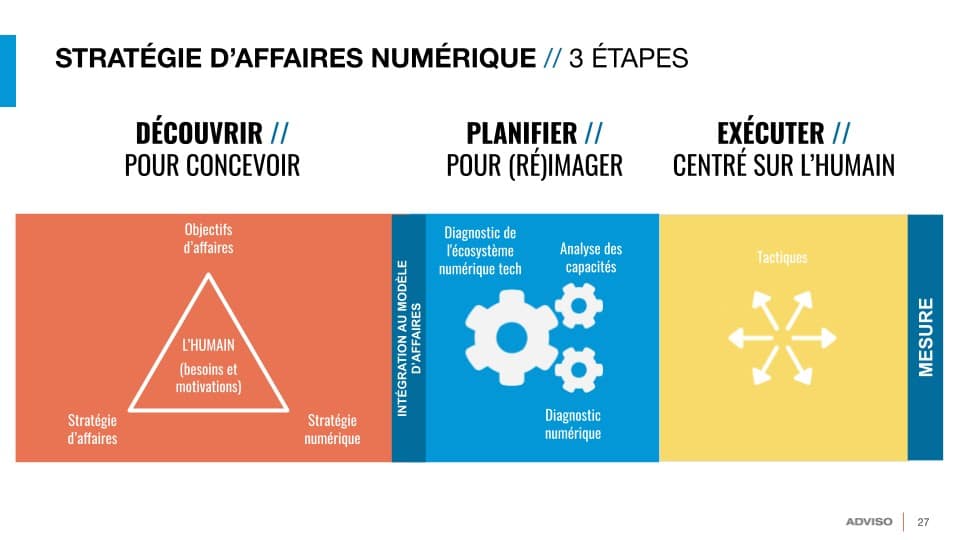
1. Find out what matters to your customers and employees
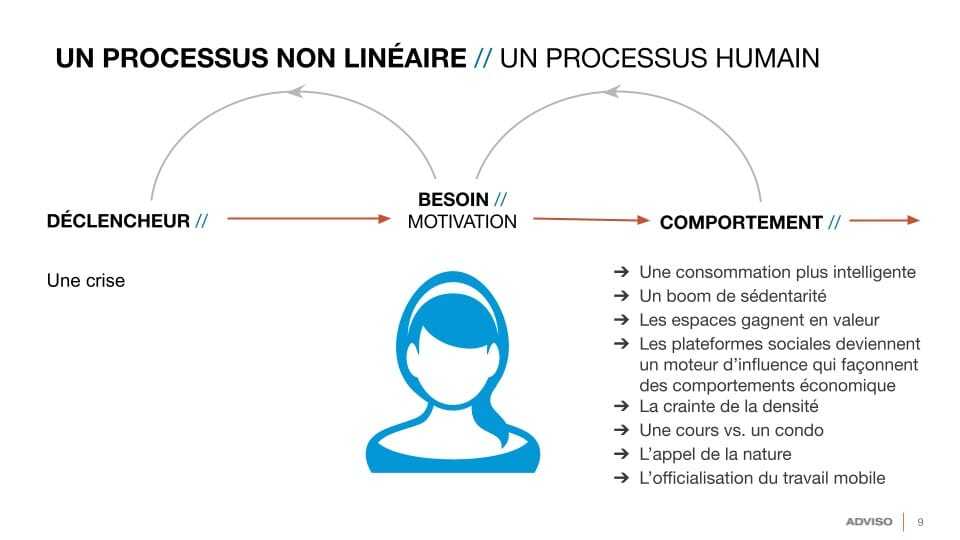
During the “discovery” stage, companies critically examine the behavioral patterns adopted by their employees and ask themselves which ones promote customer orientation and which ones can hinder it. They identify the behaviors most important to the design of the organization's customer experience, then formulate them as principles to guide specific, observable behavioral changes in the way employees create value for and with customers. clients.
P
More importantly, leaders work to identify behaviors that get in the way and find the root causes of the mindsets they want to change. Otherwise, the negative behaviors are likely to reappear once the initial enthusiasm for the possibilities of transformation begins to fade.
2. Design a new culture
The next step is to plan and implement a company-wide effort to reinforce the desired culture, starting with a plan to set change in motion, as well as major business initiatives to give lead by example and reinforce the new culture.
The tools we use shape the way we think, the way we communicate. In order to be able to think collectively, we must use common tools, and therefore speak a common language. Digital transformation is the result of a strategy, supported by the right culture.
Embedding customer experience metrics from the outset to reward employees for desired actions and behaviors emphasizes common goals and encourages accountability for each person's daily actions.
3. Honoring the promise of customer centricity
Once the basics are in place, companies need to promote this customer-centric culture and give employees the support and incentives they need to improve the customer experience. Successful organizations typically make changes on multiple fronts:
- They adapt the work environment to create a consistent employee experience and drive value creation.
- They create opportunities for employees to overcome obstacles more quickly through tools and processes that promote decision-making autonomy.
- They ensure that management leads by example and demonstrates a clear commitment to change.
Conclusion
Companies with a culture that emphasizes value creation across the entire value chain are likely to improve customer satisfaction and achieve lasting results that lead to improved health and performance organisation. But to create lasting performance in customer experience, you need to transform the culture of the company at all levels.
To start, you have to ask yourself the right questions:
- Where does the organization stand in understanding and identifying the real needs and necessary behavioral changes, both for its customers and for people within the organization?
- Is the company in a position to understand how its offer can meet the evolving needs and behaviors of its customers?
- Does it have the human, operational and structural capacities to find insights, identify the value to be extracted and seize the opportunities that arise?
- What would the ideal culture of the organization look like in two or three years? Which behaviors are the most important to deploy value creation mechanisms with customers?
- What are the cultural barriers or mindsets that will need to change?
