
After spending 30 years in loyalty, I’ve made a worrying observation: Loyalty programs are often managed using the wrong KPIs.
These key performance indicators (KPIs) often mask serious problems. They reassure managers, guide bad decisions, and give the impression that the program is performing well... when sometimes it’s in trouble.
Today I’ll be helping you distinguish between KPIs that are comforting (vanity metrics) and those that truly reveal your program’s performance.
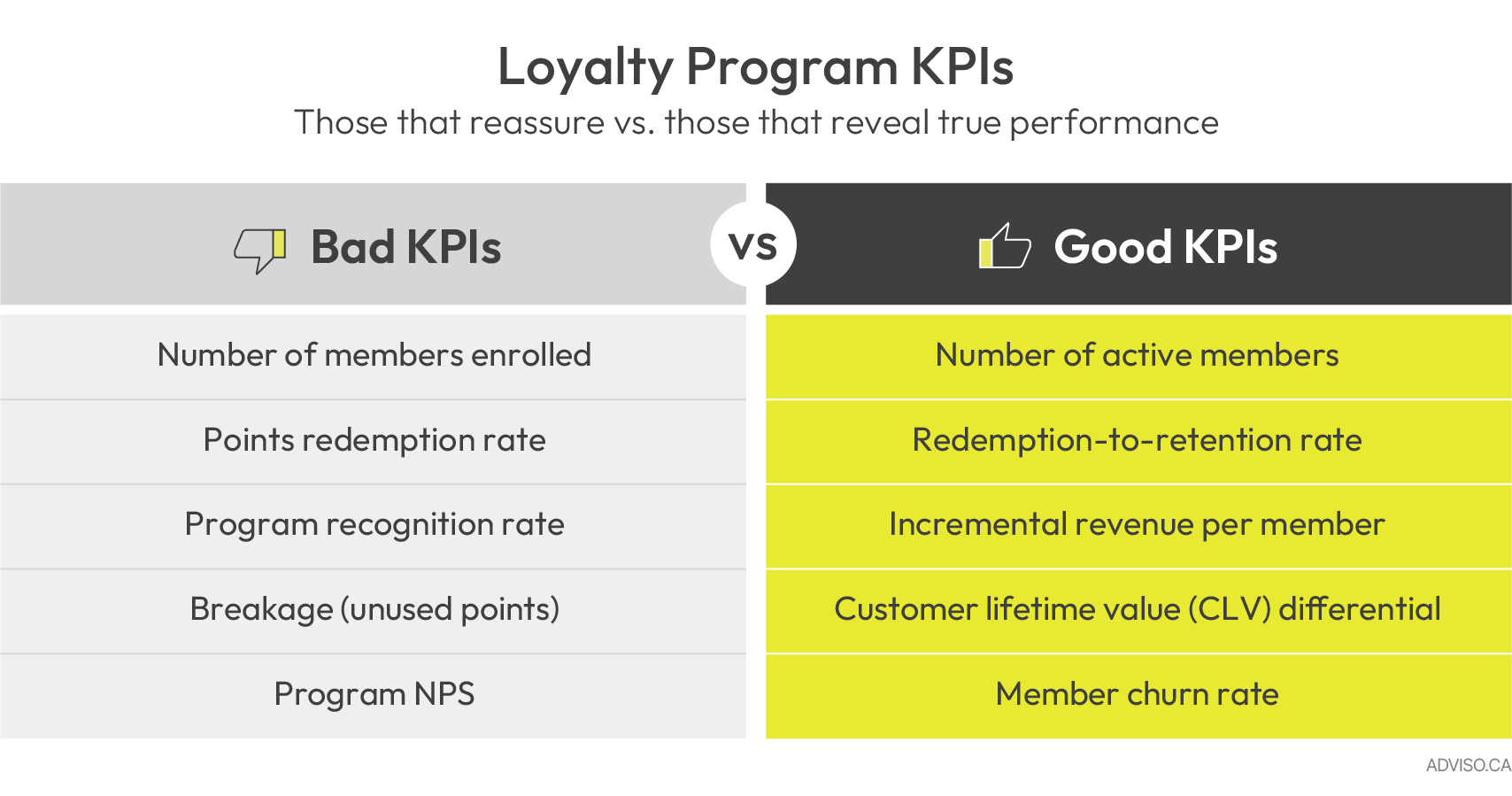
Misleading KPIs for loyalty programs
The number of members is increasing, points are being redeemed, and recognition is growing. Yet the company is getting little real value out of the program.
The problem doesn’t originate in the software or the martech platform. It results from the KPIs chosen to manage the program—indicators that make you feel good, but are often misleading.
Number of members enrolled
The number of members is the KPI that is the most used... and the most meaningless. Having 300,000 members enrolled in a loyalty program doesn’t say anything about its real value. Celebrating this figure during a management meeting is to confuse the program’s recognition with its performance. The majority of members could be inactive, which is far from representing a loyal clientele. Are these members or just email addresses?
Points redemption rate
This is intuitive, but misleading. A high redemption rate could mean that members value the rewards, or simply that they’re using up their points before switching to a competitor. Redemption measures activity, not loyalty.
Program recognition rate
As part of the LoyalT Study,1 adviso’s loyalty team analyzed the relationship between the recognition and performance of a loyalty program. The result: no correlation. Being well known doesn’t mean performing well.
Coalition programs, such as Air Miles or Scene+, are a good illustration of this. Supported by big media budgets and many partners, they have strong recognition among Canadians. However, their performance is below average.1 For a number of years, many have been trailing the pack in the annual ranking of Canadian loyalty programs.
Breakage (unused points)
Many managers feel happy about a high breakage rate because it reduces program costs. But in reality, high breakage means above all that members don’t find the rewards attractive enough to engage with the program. It’s an alarm bell disguised as good news.
Net Promoter Score (NPS)
NPS measures the probability that a member will recommend your loyalty program. The problem is it captures way too many variables to isolate the true impact of the program. A member may very well recommend a program while not being very engaged with it, and without modifying or concentrating their purchases. NPS measures perception, not purchase behaviour.
The KPIs that reveal loyalty program performance
The right KPIs to track are those that directly measure a loyalty program’s performance, not its recognition or mere activity. These are the indicators that truly influence business objectives.
Number of active members
This takes the true pulse of the program. It speaks to members that have participated in earning and burning during a given period, ideally by segment. In other words, members that have both earned and redeemed points. To evaluate this, a 90-day window is often used. The industry generally considers a rate below 25–30% as an alarming signal.
Redemption-to-Retention Rate
Here we’re not looking at the raw redemption rate, but at the correlation between redemption and retention. Do members who redeem their points come back more often? Has their average cart increased over time? If the answer is no, your program is handing out value without creating loyalty. This is an important nuance that the vast majority of dashboards ignore.
Incremental revenue per member
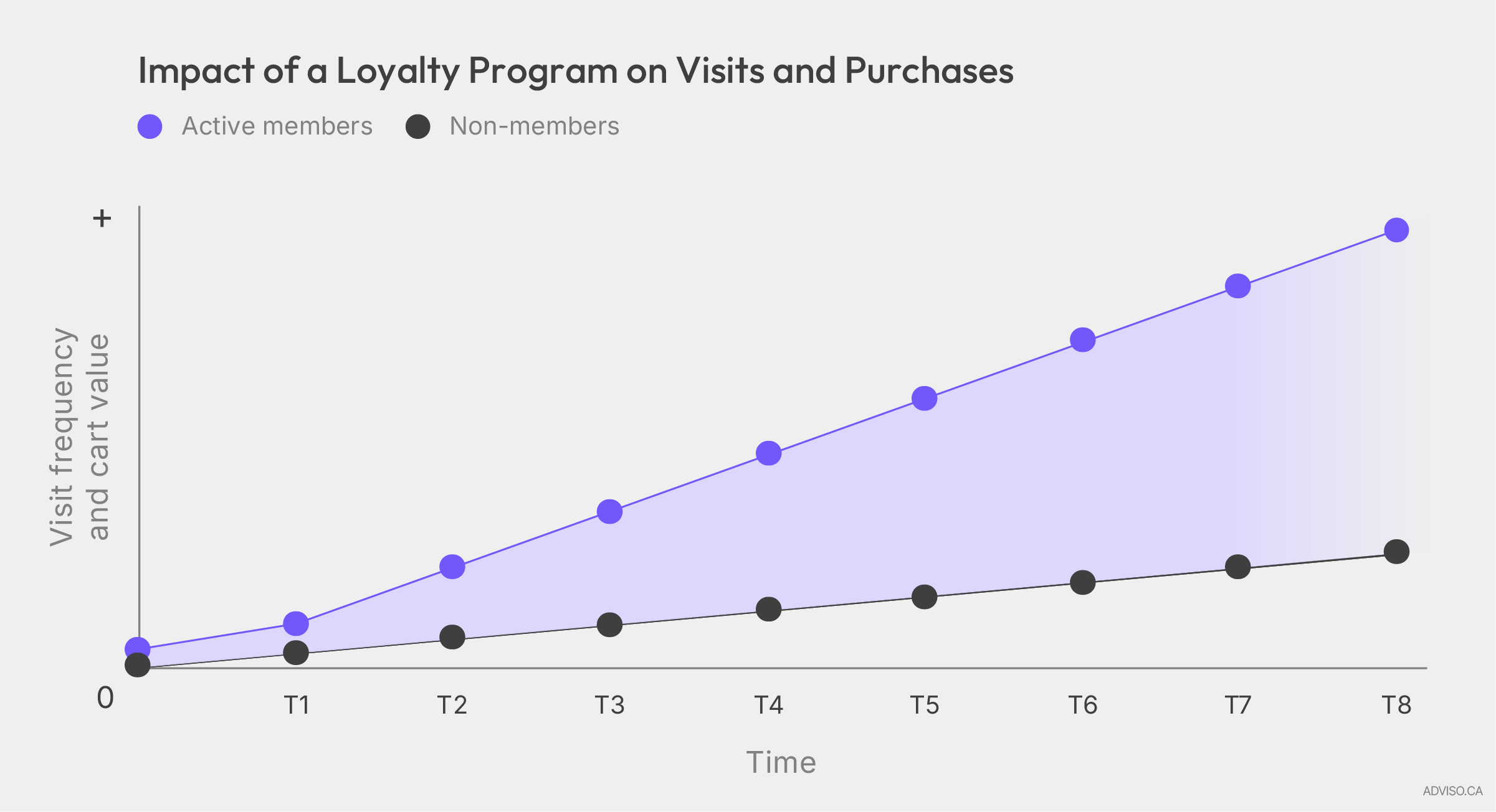
Incremental revenue per member is the only KPI that justifies (or questions) investments in a loyalty program. It answers the question that every manager should be asking themselves from the start: Does the program generate sales that would not have occurred otherwise, or are we simply rewarding purchases that the customer would have made anyway?
The answer lies in the difference in the average cart value and purchase frequency between active members and non-members, based on control groups. The variation between these two groups represents the incremental difference, or the real value (or marginal contribution) generated by the program.
Customer lifetime value (CLV) differential
This KPI compares the customer lifetime value (CLV) of active members, non-members, and former members in a given period, generally from six to 12 months. It evaluates whether the program built value in the long term... or if it simply purchased transactions in the short term.
Member churn rate
How many active members become inactive from one period to the next? This is exactly what is measured by the churn rate, one of the most revealing indicators of program health. And yet it’s still too often ignored by managers.
Increasing disengagement generally won’t be reflected in sales until after a few months. On the other hand, in the data the signals appear a lot earlier. This is exactly the predictive value of this indicator: to detect problems before your revenues take a hit.
Two often-neglected, complementary KPIs
The sales penetration rate and transaction penetration rate aren’t essential for measuring the actual performance of your loyalty program. However, they’re still easy to calculate and very useful for evaluating in concrete terms the integration of the program into your clientele’s purchase habits.
Sales penetration rate
Also called the carded sales rate, this indicator measures the proportion of sales made among members compared to total sales. It’s calculated by simply dividing member purchases in dollars for a given period by total sales in dollars.
Transaction penetration rate
Also known as the carded transaction rate, this KPI measures the proportion of transactions made by members compared to the total number of transactions.
The ultimate KPI: Loyalty program ROI
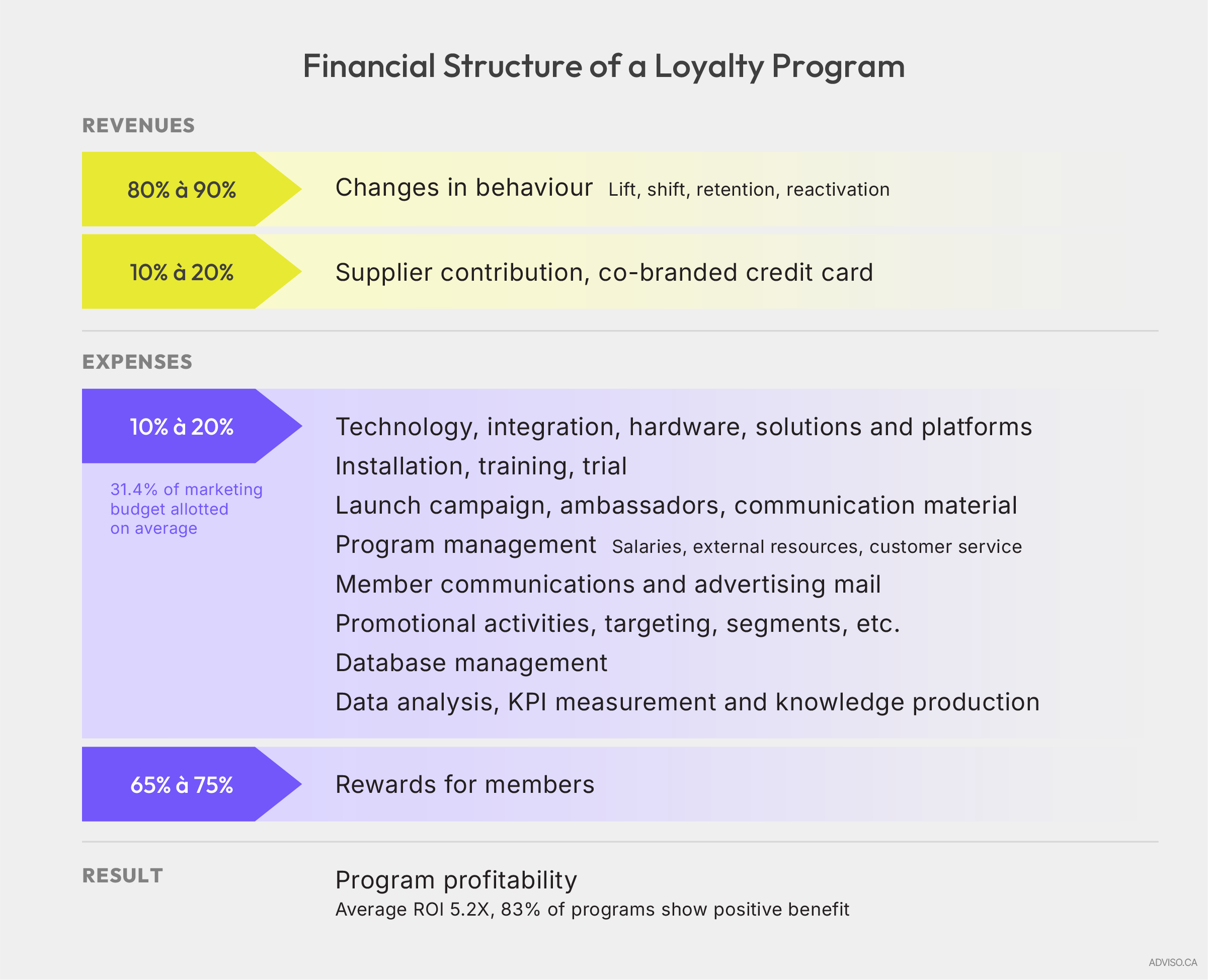
In the end, a program must generate more than it costs. This is the entire point of return on investment (ROI). Over the past 30 years, I’ve often seen loyalty programs achieve an ROI of 250% starting from their second year of operation. Other industry data show that 83% of managers who measured their ROI report a positive result, with an average return of 5.2 times the investment.2
When well structured, a loyalty program is much more profitable than marketing strategies that remain focused on the acquisition of new customers.
The KPIs you measure dictate what you optimize
KPIs are the pointer that reveals whether your program is heading in the right direction... or turning around in circles.
A program mainly managed based on sign-ups will be optimized for enrollments, not loyalty. On the other hand, a program driven by the CLV differential or incremental revenue builds long-term value. It’s not a question of dashboards. It’s a strategic decision about what loyalty really means for your organization.
The right KPIs aren’t necessarily the easiest to produce. They’re those that ask the right questions and that prevent you from confusing the program’s activity with its performance.
At adviso, we build loyalty programs that are measurable, profitable, and aligned with your data and business objectives. Let’s take a look at how we can optimize yours.
REFERENCES
1LoyalT Study, by adviso and Ad Hoc Research, 15,000 Canadian respondents
2Antavo, Global Customer Loyalty Report 2025
The article Is Your Loyalty Program Measuring the Right KPIs? first appeared on adviso.ca.


%20(1)-1.jpg)